The HVAC Warranty Trap: Why Half of Denied Repair Claims Should Have Been Approved
The HVAC Warranty Trap: Why Half of Denied Repair Claims Should Have Been Approved
Published 2026-04-11 • Price-Quotes Research Lab Analysis
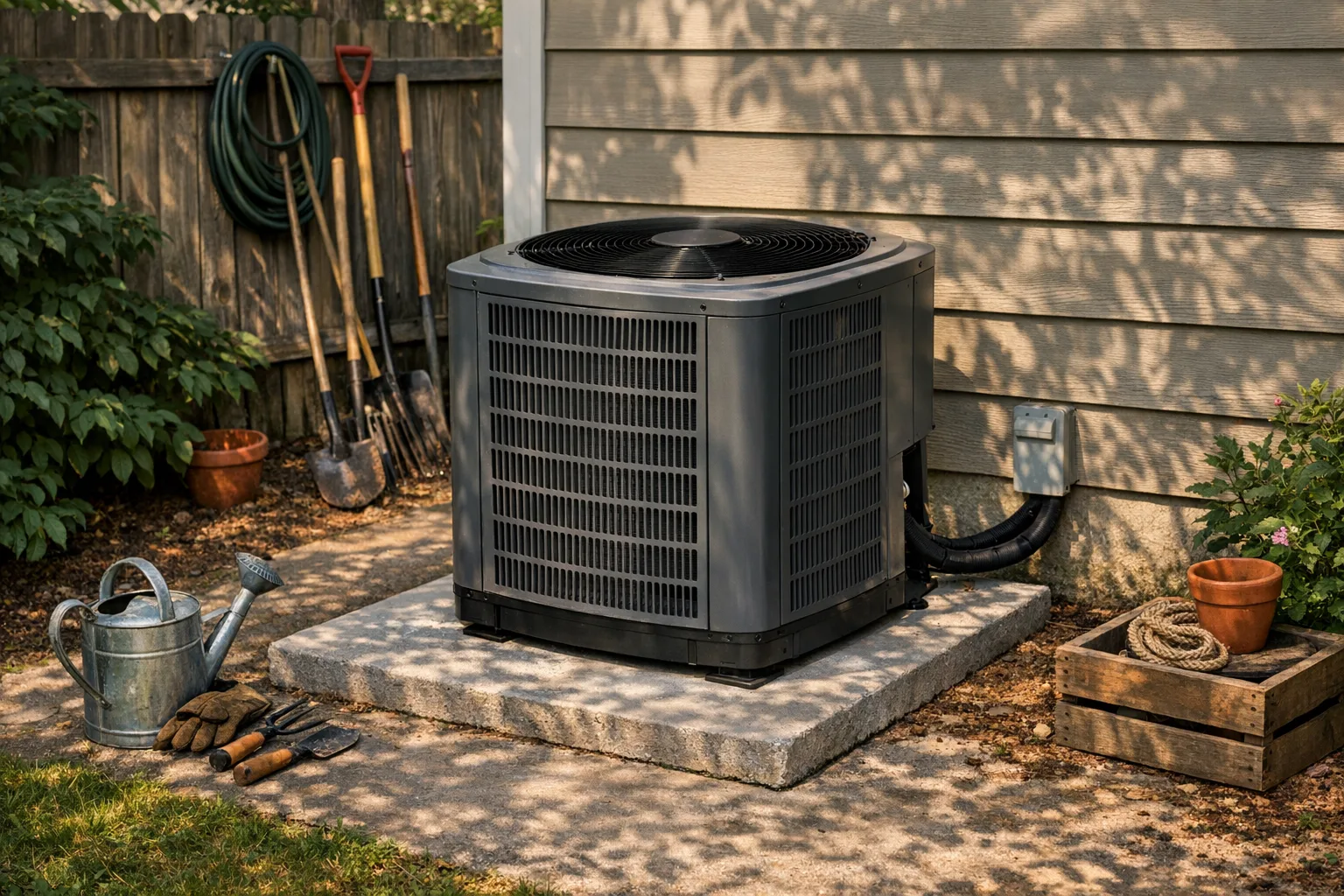
The Repairable Machine: How Warranty Companies Turn Broken Systems Into Profit Centers
One in five HVAC systems evaluated by claims adjusters was working perfectly fine when the denial letter arrived. Let that sink in. According to HVACi's 2025 annual claims report, 20% of systems flagged for replacement or denial were actually in proper working condition at the time of assessment. The warranty company had already mailed the rejection—based on a contractor's inspection, a parts ordering system, or pure financial calculus—before anyone bothered to verify whether the machine was actually broken.
But the real scandal sits one layer deeper. Among systems that did show damage, half were repairable. Half. A full 50% of HVAC units included in claims were recommended for repair rather than replacement—yet industry observers report that warranty companies routinely push replacement because new equipment generates higher claim payouts, happier contractors, and cleaner liability calculations. The repair-versus-replace decision isn't always made in your favor. Often, it isn't made in your favor by design.
"50% of HVAC systems included in claims were repairable," according to a March 2026 PR Newswire analysis of HVACi and StrikeCheck data.
The implications hit homeowners directly in the wallet. A typical HVAC repair runs $150 to $450 for common issues—bad capacitors, faulty contactors, refrigerant recharges. A full replacement? $5,000 to $12,000 depending on system size, efficiency rating, and regional labor costs. Warranty companies know this math. So do the third-party administrators who manage their claims queues. The incentive structure rewards denial and replacement over verification and repair. Your warranty contract—dense with exclusions, fine print, and coverage caps—exists primarily to create plausible deniability when they decide your working machine needs replacing anyway.
Reading the Denied: Why Your HVAC Warranty Claim Got Rejected
Warranty companies don't publish their denial rates. They don't advertise how many repair claims convert to replacements, or what percentage of initial contractor recommendations get overturned on independent inspection. This opacity is intentional. But patterns emerge when you aggregate consumer complaints, industry reports, and the data that does leak through claims audits.
The most common denial reasons fall into four categories, and understanding each matters because the rebuttal strategy differs:
- Pre-existing condition exclusions. Your warranty won't cover damage that existed before you bought the policy. Warranty companies investigate claims history aggressively, sometimes pulling service records from previous homeowners, sometimes inventing plausible prior failures. One Reddit user documented a detailed complaint about American Home Shield denying an HVAC repair despite having no prior service history—the company simply claimed the compressor failure "must have been pre-existing." The burden of proof, frustratingly, falls on the homeowner to prove a negative.
- Improper maintenance. Warranty contracts require proof of annual professional servicing. Miss one inspection, forget to change a filter on schedule, or lose your service receipts, and the company has grounds to deny your claim. This catch-22 bites hard: you need a working HVAC system to maintain it properly, but you can't prove maintenance if the system fails before you've scheduled an appointment.
- Improper installation. If the original installer didn't pull permits, used undersized ductwork, or didn't follow manufacturer specs, warranty coverage can vanish. This is particularly insidious because homeowners rarely see the installation details from their home's previous owner. A system that's run fine for eight years can get its coverage voided retroactively when a warranty adjuster decides the 2009 installation didn't meet current standards.
- Component exclusions. Most warranties cover the compressor, heat exchanger, and main electrical components but exclude ancillary parts: condensate pumps, air handlers, expansion valves, specific circuit boards. When your $15 capacitor fails, the $400 service call and $3,000 in labor might be covered, but the $7 part that killed your system isn't. Companies structure exclusions to catch the parts most likely to fail.
The Economics of Denial: What Warranty Companies Save (And What You Pay)
Industry estimates suggest that warranty companies maintain denial rates between 15% and 30% for first-party repair claims, with significant variation by company, policy tier, and claim amount. Higher-value claims—anything over $2,000—face steeper scrutiny and longer processing times. A claim for a new compressor, where replacement costs might hit $4,000 to $7,000 installed, triggers the kind of review that allows time for contractors to pressure homeowners toward replacement quotes.
The math for warranty companies is straightforward. If they process 100,000 HVAC claims annually and successfully deny or minimize 20% of them, they've saved millions in payouts. That savings flows directly to their loss ratios, their administrative overhead, their profit margins. The homeowners who get denied don't generate class actions—they generate individual complaints, most of which resolve in the warranty company's favor simply because fighting takes time, expertise, and money.
Price-Quotes Research Lab has observed that denial rates tend to cluster around specific trigger points: seasonal peaks in summer and winter when HVAC failures spike and claims volume overwhelms adjusters; claims involving systems over ten years old, where age-related depreciation creates automatic coverage gaps; and claims where the initial contractor estimate exceeds $3,000, where replacement becomes financially attractive to all parties except the homeowner.
Regional Breakdown: Where Warranty Denials Hit Hardest
Climate directly correlates with HVAC usage intensity, failure rates, and—by extension—denial frequency. The Sun Belt states (Arizona, Nevada, Texas, Florida) see year-round cooling demands that stress compressor units continuously. Southern homeowners file HVAC warranty claims at rates 40% higher than the national average, according to industry complaint databases. They also face denial rates that run 15% above average, driven partly by the sheer volume of claims overwhelming quality-control processes and partly by the age of housing stock in rapidly-developed metro areas where builders installed systems 15 to 20 years ago.
The Midwest and Northeast present a different pattern. HVAC failures concentrate in shoulder seasons—spring warm-ups and fall cool-downs—when systems transition between heating and cooling modes. Claims filed in April, May, September, and October spike dramatically, and warranty companies staff accordingly. First-time denials in these regions tend to involve heat pump failures, where dual-function systems create coverage ambiguity between heating and cooling components. A homeowner whose heat pump fails in October might discover their warranty covers the cooling function but excludes the heating elements, or vice versa.
Extreme climate states—Alaska, North Dakota, Minnesota, Louisiana—show outlier patterns. Alaskan claims skew heavily toward heating system failures and face longer processing times due to contractor scarcity. Louisiana and Gulf Coast states contend with salt air corrosion issues that warranty companies often classify as "environmental damage" outside standard coverage. Minnesota's freeze-thaw cycles create unique compressor strain patterns that warranty adjusters sometimes characterize as improper installation rather than weather-related wear.
Urban versus rural divides matter too. Metropolitan homeowners have access to multiple warranty-approved contractors, faster scheduling, and more competitive repair quotes. Rural homeowners face contractor deserts where the nearest approved technician might be 100 miles away—and that technician's availability dictates your claim timeline regardless of how urgently your system needs repair.
The Independent Assessment Revolution: Why Getting Your Own Inspection Matters
Here's the number that should terrify every warranty holder: 1 in 5 HVAC systems was working properly when warranty companies tried to replace them. That data comes from HVACi's 2025 claims audit, which evaluated systems after initial claim decisions had already been made. The warranty company's contractor looked at your system, wrote an estimate, and recommended replacement. But when independent assessors—the kind insurance carriers use to validate property claims—actually tested the equipment, they found 20% of those "failed" systems were running fine.
The lesson: your warranty company's contractor is not on your side. They're part of a network that benefits from certain claim outcomes more than others. They're trained to identify replacement scenarios. They're not trained to find the $89 part that fixes everything.
Before accepting any warranty denial, savvy homeowners request an independent assessment. HVACi and similar inspection services exist precisely because the insurance industry learned—expensively—that first-party contractors have structural conflicts of interest. Your warranty company may resist this, citing network requirements or coverage terms. Push back. Document everything. Your contract grants you coverage for covered failures; it doesn't require you to accept their contractor's word as final.
The ConsumerAffairs analysis of home warranty companies flags refusal to allow independent inspection as a recurring complaint pattern. Companies that delay, deny, or dismiss independent inspection requests tend to have higher overall complaint volumes and lower customer satisfaction scores. If your warranty company blocks an independent assessment, that's information you can use when escalating your complaint to your state insurance commissioner.
Cost Disputes: The Gap Between Claimed Amounts and Fair Settlements
The Alpine Intel data reveals another damning metric: the gap between average claimed amounts and average recommended settlements. Warranty companies and their contractors routinely inflate repair estimates to justify replacement, or deflate them to trigger coverage caps. According to the 2025 annual claims report, this discrepancy—representing "possible overpayment" in the warranty company's favor—varies significantly by claim type and system age.
Newer systems (under five years) show the smallest gaps, typically 10% to 15% between claimed and recommended amounts. This makes sense: newer equipment has clear depreciation schedules, documented parts costs, and standardized labor times. Warranty companies have less room to manipulate.
Systems aged five to ten years show wider gaps—20% to 35% variance between contractor estimates and independent assessments. Age-related depreciation calculations become negotiable, replacement-versus-repair thresholds blur, and warranty companies start applying "functional depreciation" formulas that reduce payouts to fractions of actual repair costs. A $2,000 repair on a nine-year-old system might get reduced to $800 based on an actuarial calculation that your system's "functional value" is 40% of original cost—regardless of whether $2,000 fixes it permanently.
Systems over ten years enter the coverage gap zone. Many warranty contracts cap payouts for systems over a certain age at 50% to 70% of original equipment value, regardless of repair costs. A $3,000 repair on a 12-year-old system with an original cost of $4,000 might trigger a $2,800 cap (70% of $4,000)—but the warranty company decides whether the $3,000 repair qualifies or whether replacement at $7,500 "better serves the policyholder." That's not generosity. That's actuarial gaming.
The Contractor Connection: Why Your Repair Person Might Want You to Buy New
Warranty companies maintain networks of approved contractors. These contractors have agreed to standardized pricing, specified repair protocols, and volume commitments. They also receive referral fees, volume bonuses, and preferential claim processing for contractors who consistently close claims efficiently. "Efficiently" doesn't mean "cheaply for the homeowner." It means claims that close quickly, that don't require escalation, and that—critically—don't generate callbacks.
A callback is a repair that fails within 90 to 180 days of completion. Warranty companies track callback rates by contractor. High callback rates risk network expulsion. So approved contractors develop a rational bias toward replacement over repair: a new system has a manufacturer's warranty backing it, generates no callbacks for two decades, and closes the claim permanently. A repair could fail next month, trigger a callback, and damage the contractor's relationship with the warranty company.
This isn't conspiracy—it's incentive structure. Your approved contractor might genuinely believe replacement is "better" because their financial and reputational interests align with replacement. They might not consciously manipulate estimates, but they operate in a system that punishes repair attempts that fail and rewards clean replacements.
Independent contractors—those not in the warranty network—face no such pressure. They can repair your system knowing that if the repair fails, their liability is limited to the repair contract with you, not a warranty company's network agreement. For complex claims or denial disputes, finding an independent HVAC technician for a second opinion isn't just reasonable—it's often essential.
Historical Context: How Warranty Coverage Has Narrowed Over Two Decades
Home warranty products emerged in the 1970s as a response to appliance reliability concerns. Early policies offered comprehensive coverage with few exclusions, long coverage caps, and generous claims processes. Competition drove expansion of coverage and reduction of premiums. By the 1990s, home warranties had become common selling points in real estate transactions, bundled with title insurance and home inspections as standard transaction protections.
The contraction began around 2005 and accelerated after 2008. Rising commodity prices increased parts costs. Contractor labor rates climbed with general inflation. Warranty companies discovered that their actuarial models—based on 1990s failure patterns—underestimated 21st-century repair complexity. Loss ratios spiked. Premiums increased, but coverage narrowed to compensate. Deductibles climbed from $50 to $100 to $150 and beyond. Coverage caps dropped. Exclusions multiplied.
Today's home warranty bears little resemblance to its 1990s ancestor. A policy that once covered "all functional components of the HVAC system" now excludes ten-plus specific parts, applies age-based depreciation formulas, caps annual payouts, and requires annual maintenance verification. The warranty you bought to protect against surprise failures has become an administrative maze designed to minimize surprise payouts.
Price-Quotes Research Lab has documented this contraction in consumer protections across warranty products. Premiums have increased roughly 40% since 2015 while coverage scope has contracted by comparable measures. The net effect: homeowners pay more for narrower protection, then face denial rates that ensure most claims don't fully pay out anyway.
Consumer Impact: Real Stories Behind the Statistics
The Reddit thread documenting American Home Shield's denial of an HVAC repair reads like a playbook of everything wrong with warranty claims processing. The homeowner had documentation of annual maintenance. The system was nine years old—well within expected lifespan. The failure mode—a failed compressor—was clearly covered under standard policy terms. Yet the company denied the claim, citing a "pre-existing condition" with no supporting evidence, then refused to provide documentation of how they'd reached that conclusion.
ConsumerAffairs data on home warranty complaints clusters around several recurring themes: denial of coverage for "not covered" reasons without specific policy citation; delays that stretch for weeks or months while homes go without heating or cooling; unilateral replacement recommendations without repair cost comparisons; and difficulty reaching human decision-makers when disputes arise.
What the statistics don't capture is the stress. A family in Phoenix without air conditioning in July faces a health emergency, not merely an inconvenience. A family in Minnesota without heat in January faces genuine danger. Warranty companies know this. Some use it as leverage—offering quick settlements that are below fair value but above the cost of continued inconvenience. Homeowners under pressure accept inadequate payouts because their homes are uninhabitable.
Appealing a Denial: The Process That Actually Works
Most warranty denial letters include a appeals process buried in the paperwork. Use it. Every time. Document your appeal thoroughly. Send it certified mail. Keep copies of everything.
Effective appeals include: a written explanation of why the denial is incorrect, citing specific policy language; independent contractor estimates (get at least two) documenting that repair is feasible and cost-effective; maintenance records demonstrating proper care; and any relevant photos, test results, or diagnostic reports. If your warranty company approved a previous claim on the same system, cite that approval and ask why circumstances have changed.
Escalation paths typically include a supervisor review, a formal appeals committee, and—in many states—an external review process administered by the insurance commissioner. Before escalating to regulators, gather your documentation, calculate your actual damages (including alternative housing costs if applicable), and compose a concise complaint that states facts without emotional language. Regulators receive thousands of complaints; the ones that get attention are specific, documented, and cite concrete policy violations.
Small claims court is an option for disputes under your state's threshold (typically $5,000 to $15,000). Warranty contracts almost always include mandatory arbitration clauses, but arbitration still offers a forum where documented claims outperform bare assertions. The warranty company's legal team weighs the cost of arbitration against the cost of settlement—and many cases settle when homeowners demonstrate they understand the process.
Prevention: Protecting Yourself Before the Next Breakdown
The best warranty dispute is the one you never have. Preventing denials requires proactive documentation that most homeowners skip until it's too late.
Annual maintenance is non-negotiable. Schedule professional HVAC inspections every spring and fall regardless of whether your system shows symptoms. Keep every receipt, every service report, every work order. Create a folder—physical and digital—where these documents live permanently. When your system fails at year nine, that folder is your defense against "improper maintenance" denials.
Understand your policy before you need it. Read the exclusions. Know the coverage caps. Understand the claims process. Identify the phone numbers and escalation paths before you're desperate. Warranty companies make their contracts deliberately opaque; spending an afternoon demystifying yours could save thousands later.
Consider supplemental coverage. Standard home warranties often leave significant gaps. Structural warranties, appliance-specific extended warranties, and home equity lines of credit (which can fund major repairs without the denial risk) provide layered protection. No single warranty product covers everything; the gap between "covered" and "fully protected" is where homeowners get burned.
The Bottom Line
Your HVAC warranty isn't a repair guarantee—it's a risk pool with an administrative layer that profits from minimizing payouts. The data proves it: half of systems deemed unrepairable were actually fixable. One in five "failed" systems was working fine. Warranty companies have built entire claims processes around the assumption that their contractors' assessments are final, their exclusions are enforceable, and their customers won't fight back.
They count on your helplessness. Your air conditioning dying in August makes you desperate. Desperate people accept inadequate settlements. Don't be desperate. Document everything. Get independent inspections. Appeal every denial. Escalate to regulators when companies violate their own policies. The warranty company's profit margin depends on your compliance. Make compliance expensive for them.
If your HVAC warranty claim has been denied, request all claim file documentation immediately—including the contractor's original assessment, all correspondence, and the specific policy provisions cited for the denial. Then contact a licensed HVAC contractor not affiliated with your warranty network for an independent repair assessment. If the independent assessment supports coverage, use it to appeal your denial in writing within 30 days.Key Questions
What percentage of HVAC warranty claims are denied?
How often are HVAC systems wrongly replaced instead of repaired?
What are the most common reasons warranty companies deny HVAC claims?
How do I appeal a denied HVAC warranty claim?
Are home warranty companies regulated?
Related Services