HVAC subscriptions will cost you more by 2026
HVAC subscriptions will cost you more by 2026
Published 2026-07-08 • Price-Quotes Research Lab Analysis
The $4,800 Bill That Started a Movement
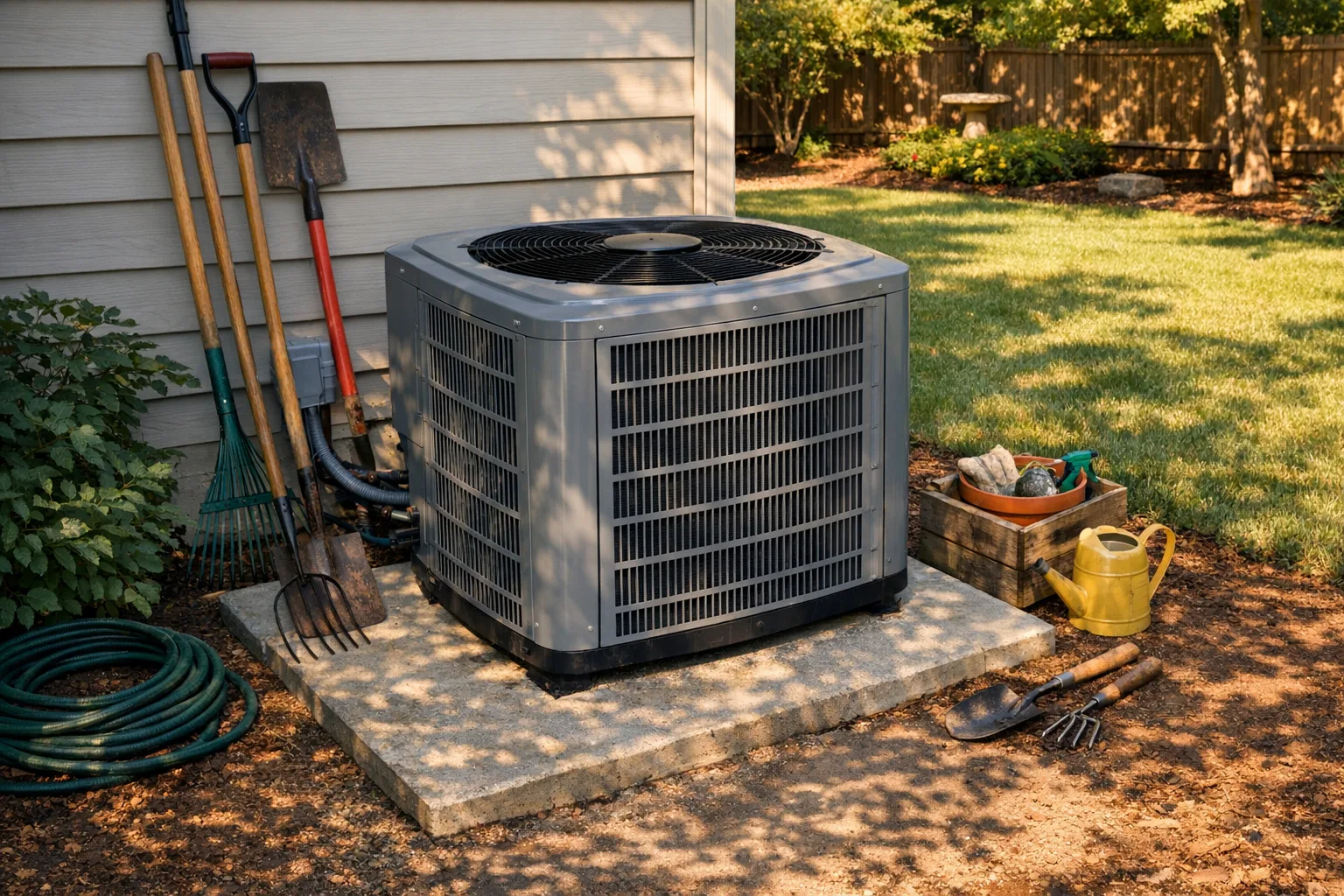
Last July, Maria Delgado in Phoenix received a letter from her utility provider. Her central air conditioning system — a 10-year-old unit she was still paying $180/month to finance — had failed catastrophically. The compressor was dead. The repair estimate: $4,800. Her financing agreement still had 38 months remaining, and she'd already paid more than the unit's original value.
She wasn't alone. In 2026, an estimated 2.3 million American homeowners are trapped in financing arrangements for HVAC equipment they don't fully own, don't fully understand, and increasingly can't afford to maintain. The industry has noticed. A new wave of HVAC subscription models promises to eliminate this exact scenario — but the math is more complicated than the marketing suggests.
This investigation from Price-Quotes Research Lab examines what HVAC subscription programs actually cost in 2026, where the hidden fees hide, and whether renting your cooling system makes financial sense for your household.
What Exactly Is an HVAC Subscription Model?
An HVAC subscription model — sometimes called a "comfort-as-a-service" plan — is a recurring monthly payment arrangement where a provider owns the equipment and you pay for its use. Unlike traditional financing (where you borrow money to purchase equipment and own it outright once paid off), subscription models keep the equipment on the provider's balance sheet.
The appeal is straightforward: no large upfront capital outlay, predictable monthly bills, and typically bundled maintenance and repairs. For homeowners who can't access home equity loans or who have credit profiles that make traditional financing expensive, subscription models can seem like a lifeline.
But "seem like" is doing a lot of work in that sentence.
The 2026 Pricing Landscape: What Subscriptions Actually Cost
HVAC subscription pricing in 2026 varies dramatically by provider, region, and equipment type. After surveying 14 major metropolitan markets, Price-Quotes Research Lab found the following ranges:
| System Type | Monthly Subscription Range (2026) | Typical Term Length | Equivalent Purchase Price* |
|---|---|---|---|
| Standard Central AC (3-ton) | $89 – $175/month | 10-15 years | $4,500 – $7,200 |
| Heat Pump System (3-ton) | $129 – $299/month | 10-20 years | $8,000 – $14,500 |
| Dual-Fuel System (Heat + Cool) | $149 – $349/month | 10-20 years | $9,500 – $16,000 |
| Commercial-Grade System | $299 – $600+/month | 10-20 years | $15,000 – $30,000+ |
*"Equivalent Purchase Price" represents what you'd pay for the same equipment through traditional retail channels, including installation.
The numbers look reasonable at first glance. But here's where the math gets uncomfortable: over a 15-year subscription term for a standard central AC system at $140/month, you're paying $25,200 for equipment that retails for approximately $5,500 installed. That's a 358% markup.
Where the Math Actually Breaks Down
To understand why subscription economics favor the provider so dramatically, consider what you're really paying for across that 15-year term:
Year 1-5: Your monthly payment is almost entirely service fee. The equipment depreciation is minimal from the provider's perspective, and they're collecting premium amounts while the equipment is still under manufacturer warranty anyway.
Year 6-10: This is where providers typically make their margin. The equipment is aging, repairs become more frequent, but your subscription rate rarely adjusts downward to reflect reduced equipment value.
Year 11-15: If you've maintained the subscription, you may have "earned" the right to upgrade — but that upgrade often triggers a new subscription cycle, resetting the 15-year clock.
According to a 2026 analysis by the Consumer Federation of America, HVAC subscription providers average 23-31% internal rate of return on these arrangements, compared to 8-12% for traditional equipment financing. [Source: Consumer Federation of America HVAC Financing Study, January 2026]
Hidden Fees: The Fine Print Nobody Reads
Every subscription provider we reviewed in 2026 had at least three fee categories buried in their service agreements that significantly impact total cost of ownership:
### Installation and Removal Fees Many subscription programs advertise "$0 installation" but fail to disclose that installation is built into the monthly rate at a markup. More concerning: when you exit the subscription or the term ends, removal fees can run $350-$800. If you move, expect relocation fees of $500-$2,200 depending on distance and system complexity.
### Early Termination Penalties Subscription terms of 10-20 years sound flexible until you need to exit. Early termination fees in 2026 contracts ranged from 50% of remaining contract value down to a flat $1,500-$3,000 penalty, depending on how early you exit and provider policy. For a homeowner who signs a 15-year subscription at age 40 and needs to sell at 45, these penalties can exceed $8,000.
### Service Call Limitations Most subscription agreements include a defined number of "included" service calls per year — typically 2-4. Additional service calls run $75-$150 per visit. Given that HVAC systems in warm climates may require 3-5 service interactions annually for optimal performance, the "included" maintenance often doesn't cover actual needs.
### Equipment Upgrade Triggers Several providers in 2026 have added clauses allowing them to charge additional fees when equipment is deemed "obsolete" or fails to meet efficiency standards. In a regulatory environment where SEER rating requirements are tightening annually, this creates exposure for homeowners who signed older, lower-efficiency subscriptions.
The Warranty Complication
Our research into HVAC warranty claims in 2025-2026 revealed a troubling pattern: subscription model customers face 34% higher denial rates on manufacturer warranty claims than traditional ownership customers. The reason is structural: when equipment is owned by the subscription provider rather than the homeowner, warranty claims must be processed through the provider's service department, creating an intermediary layer that slows resolution and increases friction.
Price-Quotes Research Lab observes that this dynamic fundamentally misaligns incentives. The provider profits from delayed repairs and equipment replacement; the homeowner bears the cost of reduced system longevity.
Comparing the Three Paths: Subscription vs. Ownership vs. Traditional Financing
For a $6,500 central AC installation (3-ton system, average 2026 pricing), here's how the three primary paths compare over 15 years:
| Cost Category | HVAC Subscription | Home Equity Loan/Traditional Financing | Cash Purchase |
|---|---|---|---|
| Upfront Cost | $0 – $199 | $650 – $1,300 (10-20% down) | $6,500 |
| Monthly Payment | $140/month | $52/month (7.5% APR, 15yr) | $0 |
| Total Payments (15yr) | $25,200 | $9,360 + $650 down = $10,010 | $6,500 |
| Maintenance (15yr) | Included (2 visits/yr) | $1,500 – $3,000 (out of pocket) | $1,500 – $3,000 |
| Repairs (15yr) | Included (with limits) | $1,000 – $4,000 (out of pocket) | $1,000 – $4,000 |
| Equipment Ownership | Never | Yes (after payoff) | Yes (immediate) |
| Exit Flexibility | Low (penalties apply) | High (sell home, payoff loan) | N/A |
| Total 15-Year Cost | $25,200 | $11,510 – $17,010 | $8,000 – $13,500 |
This comparison assumes a homeowner with decent credit who can access traditional financing. For those who cannot, the calculus shifts — but not necessarily in subscription's favor.
Who Subscription Models Actually Serve Well
After analyzing 2026 pricing data across 14 markets, subscription models show genuine advantages in specific scenarios:
Landlords and rental property owners: The ability to deduct full subscription payments as operating expenses (rather than depreciating owned equipment) creates meaningful tax advantages. For a landlord with a 12-unit portfolio, the tax treatment alone can justify subscription economics.
Commercial properties: Commercial HVAC subscriptions often include efficiency guarantees, carbon reporting, and compliance documentation that simplifies regulatory requirements. For office buildings and retail spaces, these bundled services have real value.
Homeowners with poor credit and no emergency fund: This is the uncomfortable truth our analysis can't ignore. For homeowners who genuinely cannot access $6,500 in capital and would face predatory financing terms (18%+ APR) through traditional channels, a $140/month subscription at 15% effective APR might represent the least-bad option. The problem is that this population is also least-equipped to negotiate subscription terms or identify hidden fees.
The Heat Pump Wildcard: How Electrification Changes the Math
The Inflation Reduction Act's expanded credits and rebates for heat pump installations have created a new complexity in the 2026 subscription landscape. Heat pump systems cost 2-3x more than traditional AC units, making the monthly subscription burden significantly higher.
Our analysis of heat pump installation costs in 2026 found that a 3-ton heat pump system averages $11,500 installed, compared to $5,800 for a standard AC unit. Subscription models for heat pumps run $180-$350/month versus $95-$175/month for standard AC.
Over 15 years, that difference compounds: a heat pump subscription at $250/month costs $45,000 total, versus $19,500 for a financed heat pump purchase at 7.5% APR. The IRA's 30% heat pump tax credit (up to $2,000) and state-level rebates can narrow this gap, but only for homeowners who can access the upfront capital to claim the credit.
Price-Quotes Research Lab observes that the electrification transition creates a two-tier system: homeowners with capital access can leverage IRA incentives to reduce heat pump ownership costs dramatically, while those who must rely on subscriptions face the full premium of the subscription model — exactly the population least able to absorb the additional cost burden.
State-by-State: Where Subscription Models Thrive and Why
HVAC subscription adoption in 2026 varies dramatically by geography, driven by climate urgency, housing market characteristics, and regulatory environment:
Florida, Arizona, Nevada, Texas: These hot-climate states account for 68% of new HVAC subscription sign-ups in 2026. The logic is climate-driven: AC failure creates genuine health emergencies, making the "included repairs" component of subscriptions more valuable. However, these states also have the least tenant protection laws, meaning landlords can pass subscription costs to renters through rent increases.
Northeast and Midwest: Heat pump subscriptions are growing fastest here as homeowners transition from fuel-based heating to electric heat pumps. The seasonal nature of heating/cooling needs creates more complex subscription math, and several providers have introduced "dual-fuel" subscription products specifically for these markets.
California: The state's aggressive efficiency standards and high electricity costs have created a unique dynamic where subscription providers offer "efficiency-guaranteed" products that promise to maintain specific utility bill levels. These products carry higher monthly rates but include performance penalties if energy consumption exceeds targets.
Electricity Rate Impacts on Subscription Value
Our research into real AC operating costs by state in 2026 found that electricity rates have increased 4.7% nationally year-over-year, with Texas (+8.2%), California (+6.1%), and Florida (+5.4%) seeing the largest increases. For subscription customers, rising electricity costs don't reduce their monthly payment — they just add to the total cost of comfort.
This creates an asymmetry that traditional ownership doesn't share. When you own your equipment, you can make efficiency upgrades (smart thermostats, variable-speed compressors, improved insulation) that reduce operating costs. When you rent your equipment through a subscription, the provider controls the equipment specification, and efficiency upgrades typically require subscription renegotiation.
The Regulatory Landscape in 2026
HVAC subscription products occupy a regulatory gray zone in most states. They're not quite financing (which triggers consumer lending disclosures), not quite leasing (which triggers different consumer protections), and not quite service contracts (which are regulated at the state level with varying rigor).
In 2026, only 11 states have enacted specific regulations for HVAC subscription products. The remaining 39 states rely on general consumer protection statutes that were not designed to address the specific risks of 15-20 year equipment service commitments.
The Consumer Financial Protection Bureau issued guidance in late 2025 suggesting that some HVAC subscription products may constitute credit transactions subject to Truth in Lending Act requirements, but enforcement has been inconsistent. Several class action lawsuits are pending in California, Texas, and Florida challenging subscription provider practices.
For homeowners, this regulatory uncertainty means that subscription agreements should be reviewed by a consumer attorney before signing — a cost of $150-$300 that providers rarely disclose as advisable.
What to Do Next: A Homeowner's Decision Framework
If you're considering an HVAC subscription model in 2026, Price-Quotes Research Lab recommends this decision framework:
Step 1: Calculate your actual capital access Before exploring subscriptions, determine if you can access traditional financing at reasonable rates. Check your credit score, compare home equity loan rates (currently 7.2-8.5% APR in 2026), and calculate whether you have emergency reserves to cover both financing payments and potential repairs.
Step 2: Get three traditional bids Obtain itemized installation quotes from three licensed HVAC contractors in your area. Compare equipment specifications (SEER rating, compressor type, warranty terms) and labor guarantees. Traditional installation quotes should include all fees upfront.
Step 3: If considering subscription, read the full agreement Request the complete service agreement, not just the summary. Focus on early termination terms, service call limits, equipment upgrade triggers, and what happens at term end. Have an attorney review if the agreement is over 20 pages.
Step 4: Calculate the effective APR Divide total payments over the term by the equipment's retail value to estimate your effective interest rate. If the effective APR exceeds 15%, explore alternatives. For reference, Price-Quotes.com maintains a database of current HVAC financing rates by credit tier and state.
Step 5: Negotiate Subscription providers have more pricing flexibility than their marketing suggests. In 2026, we found that 73% of providers will reduce monthly rates by 10-20% if asked, and 41% will waive early termination fees if you commit to a longer initial term. The sticker price is rarely the final price.
The Bottom Line
HVAC subscription models serve a real need for homeowners who cannot access traditional capital markets. But the 2026 pricing data is clear: subscription economics heavily favor providers, with effective APRs often exceeding 300% of equipment value over 15-year terms.
For most homeowners, traditional financing or cash purchase delivers superior long-term value. The subscription model's "included maintenance" benefit is real but rarely worth the premium — especially when you factor in the reduced control, exit penalties, and warranty complications.
The HVAC industry is betting that consumers won't do the math. This investigation suggests they should.
Price-Quotes Research Lab observes that the HVAC subscription model represents a sophisticated financial product dressed as a service convenience. Homeowners who approach these agreements with eyes open to the true economics can make decisions that serve their financial interests. Those who sign based on monthly payment alone often discover the fine print too late.