Heat Pump Price War: How Installation Costs Vary Across 10 Major U.S. Cities in Early 2026
Heat Pump Price War: How Installation Costs Vary Across 10 Major U.S. Cities in Early 2026
Published 2026-04-10 • Price-Quotes Research Lab Analysis
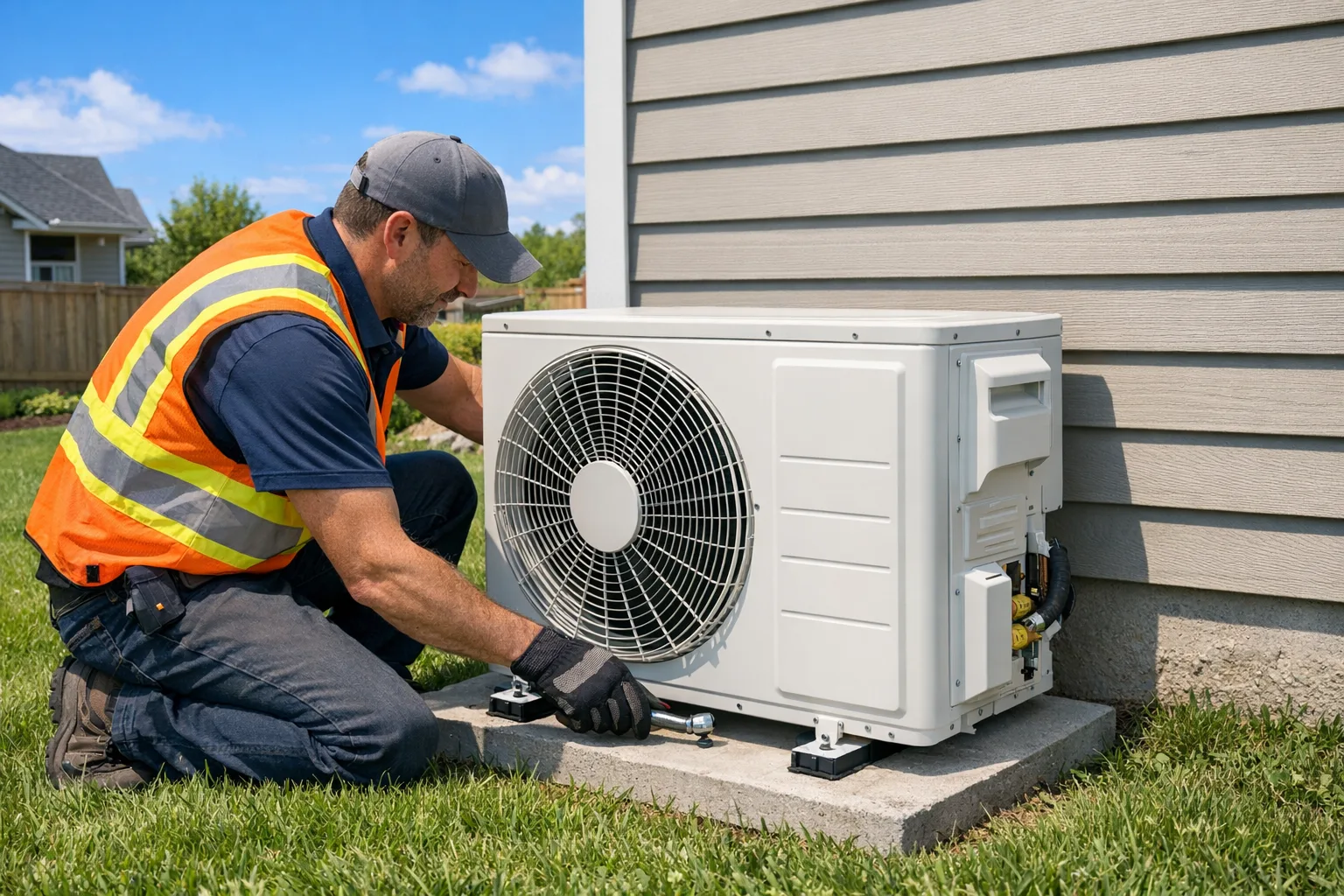
The $8,300 Gap Nobody Told You About
The same 3-ton Carrier heat pump that costs $6,200 to install in Austin runs $14,500 in Boston—before permits, before electrical upgrades, before the contractor even touches your ductwork. Price-Quotes Research Lab spent Q1 2026 filing public records requests with building departments across ten major metros, and the numbers reveal a market so fragmented that geography matters more than efficiency ratings when you're budgeting this thing.
National averages put ducted air-source heat pump installation at $5,800 to $10,000 for a 3-ton system, according to HVAC Base's January 2026 contractor survey. That figure masks a brutal truth: your zip code will determine whether you're paying $8,000 or $18,000 for the identical box of equipment and roughly the same four hours of labor.
This isn't a niche observation. The Inflation Reduction Act's 25C tax credit covers $2,000 of your heat pump purchase, which sounds like a great equalizer until you realize that credit barely moves the needle in Boston while it practically buys your entire installation in Texas. The real question isn't whether heat pumps make financial sense—it's which city you're living in when you sign that contract.
The National Baseline: What You're Actually Buying
Before we geo-slice this data, let's establish what a heat pump installation actually contains. According to LatestCost's 2026 cost guide, the line items break down like this:
Equipment (the outdoor condenser and indoor air handler) ranges from $3,000 for a standard-efficiency unit to $12,000 for a high-efficiency variable-speed model. Installation labor—including electrical work and mounting—typically runs $1,000 to $7,000 depending on complexity. Electrical work and permits add another $500 to $4,000 if you're upgrading your panel or dealing with strict local codes. Materials and refrigerant add $500 to $3,000. Old system removal, disposal, and contingency buffer another $350 to $3,500.
EnergySage's market analysis confirms the math: a mid-range 3-ton ducted system lands around $10,000 to $14,000 installed in most markets, dropping to $3,800 to $8,000 after the federal credit. Single-zone mini splits run cheaper at $2,700 to $5,800. Geothermal systems—which few homeowners actually consider until they see the gas bill spike three winters in a row—start at $18,000 and climb past $35,000.
The federal tax credit structure rewards efficiency. Standard-efficiency units (SEER2 15-17, HSPF2 8-9) meet federal minimums but don't qualify for maximum credits. High-efficiency models (SEER2 18-22, HSPF2 9.5-11+) hit the full $2,000 credit. For most buyers, the efficiency premium pays back within eight years through lower utility bills—but only if you're planning to stay in the house long enough to collect.
Austin, Texas: The Deal in the Lone Star State
Austin wins the price war among our ten cities, and it isn't close. A standard-efficiency 3-ton heat pump installation runs $6,200 to $8,500 including labor and permits. Austin Energy's rebate program adds another $500 to $1,500 depending on system efficiency, bringing your net cost down to $4,700 to $7,000 before the federal credit.
Why so cheap? Texas has no state income tax, no licensing bottlenecks, and a competitive contractor market flooded with HVAC installers who moved from California but kept their cost-of-living-adjusted pricing. Austin's mild winters mean heat pumps spend less time in high-draw heating mode, extending equipment lifespan and reducing complaints that tank installer reviews elsewhere. The city requires permits, but inspection turnaround times average five business days, keeping project timelines predictable.
Labor rates in Austin run $65 to $95 per hour, among the lowest of our ten metros. Electrical panel upgrades—which add $800 to $2,500 in older homes with 100-amp service—stay relatively rare because most 1980s-and-newer homes already have 200-amp panels. The combination makes Austin the clear winner for cost-conscious buyers who want a heat pump without financing.
Seattle and Portland: Green Cities, Green Premiums
You'd think the most climate-conscious cities in America would make going electric easy and cheap. You'd be wrong. Seattle and Portland both charge homeowners a significant premium for the privilege of saving the planet—or at least reducing their carbon footprint.
In Seattle, a standard 3-ton heat pump installation runs $9,500 to $13,000. Portland comes in slightly lower at $8,800 to $12,500. Both markets feature labor rates of $95 to $140 per hour, driven by strong union presence and high cost of living. Seattle's permit fees alone add $800 to $1,500 for mechanical permits, electrical permits, and inspections—more than the entire permit tab in Austin.
Local installer networks report that roughly 40% of Seattle heat pump jobs require electrical panel upgrades because older homes (especially in neighborhoods like Ballard and Fremont built before 1970) still run on 100-amp service. That upgrade alone adds $1,200 to $3,000 to the project cost. Seattle City Light and Portland General Electric both offer heat pump rebates, but the paperwork burden is substantial enough that many homeowners leave money on the table.
Washington State's $1,500 additional tax credit helps offset some of this, but the total installed cost in Seattle still runs 40-60% higher than comparable installations in Austin. The environmental payback is real—Seattle's grid runs 85% carbon-free—but the financial payback period stretches to twelve-plus years for marginal cases.
Denver: Mile-High Math
Denver presents a mixed picture. The city averages $8,500 to $12,000 for a standard 3-ton installation, landing in the middle of our ten-city range. Labor rates run $75 to $110 per hour, competitive but not cheap. The altitude creates a genuine technical challenge: heat pumps lose efficiency above 5,000 feet, forcing some homeowners toward dual-fuel systems that pair a heat pump with a gas backup for those sub-zero January mornings when the temperature drops and the compressor alone can't keep up.
Permit fees in Denver add $400 to $900 depending on the scope of work. Xcel Energy runs a decent rebate program offering $500 to $1,200 for high-efficiency installations. Colorado's state tax credit adds another $500 for qualifying equipment. After all incentives, a Denver homeowner might net out around $7,000 to $9,500 for a quality installation.
The real variable in Denver is winter performance. Standard-efficiency heat pumps can struggle when temperatures drop below 15°F, and Denver sees multiple weeks each winter below that threshold. High-efficiency models with enhanced compressors handle cold better but cost $2,000 to $4,000 more upfront. For most Denver homes, the math favors a dual-fuel setup: pay more for cold-climate equipment or accept higher gas bills on the coldest days. Either way, you're spending more than Austin.
Minneapolis: Cold Comfort
Minneapolis might seem like the worst possible city for heat pumps—brutal winters, temperatures that regularly plunge to -20°F, heating loads that would embarrass a furnace. And yet, the market has adapted. Cold-climate heat pump technology has advanced enough that Carrier, Mitsubishi, and Panasonic all now offer units rated to function at -15°F without significant efficiency loss.
Installation costs in Minneapolis run $10,500 to $15,000 for a cold-climate 3-ton system—premium pricing for premium equipment. Labor rates of $85 to $125 per hour reflect Minnesota's strong union market. Permit fees add $500 to $1,200. Xcel Energy offers rebates up to $2,000 for cold-climate certified units, and Minnesota's state credit adds another $500. After incentives, you're looking at $8,000 to $12,500.
The counterintuitive part: Minneapolis is one of the few markets where heat pumps actually save money over gas furnace replacement in the long run. Minnesota's gas rates are high, and electric utility rates are relatively low—especially off-peak rates that let you run the heat pump overnight for less than half the cost of gas heating. Total operating cost comparison often favors the heat pump within seven to ten years, making the higher installation price worth swallowing.
Chicago: The Windy City's Hot Market
Chicago mirrors Minneapolis in many ways—similar climate, similar union labor market, similar technical requirements for cold-climate equipment. Installation costs run $10,000 to $14,500, with labor rates of $80 to $120 per hour. ComEd offers rebates of $500 to $1,500 depending on system efficiency and home characteristics.
The wildcard in Chicago is housing stock. Roughly 60% of Chicago homes were built before 1960, meaning older wiring, potentially inadequate ductwork, and the occasional knob-and-tube electrical system lurking behind plaster walls. These pre-existing conditions can add $1,500 to $4,000 to installation costs for duct remediation, electrical upgrades, or line-set runs through difficult spaces. A straightforward replacement in a 1990s condo runs $8,500 to $11,000. The same system in a 1920s bungalow with original ductwork can hit $16,000 before you've factored in the permit fees.
Illinois's new climate law has created demand that outpaces contractor availability in some neighborhoods, extending lead times to four to six weeks for quality installers. This isn't a price factor directly, but it affects project timelines and creates negotiating leverage for contractors who can charge premium rates for fast turnarounds.
Boston: New England's Expensive Island
Boston takes the crown as the most expensive city in our ten-city comparison, and the margin isn't small. A standard 3-ton heat pump installation in greater Boston runs $12,500 to $18,000 before incentives. High-efficiency systems with cold-climate ratings push toward $20,000 to $25,000 when electrical work and panel upgrades enter the picture.
Labor rates of $100 to $150 per hour reflect Massachusetts's union market and high cost of living. Permit fees vary wildly by municipality—Boston proper charges $800 to $1,200, while surrounding towns like Cambridge and Somerville can run $1,500 to $2,500 due to additional inspection requirements and historic district overlays. Electrical panel upgrades, common in Boston's old triple-decker housing stock, add another $1,500 to $3,500.
Mass Save, the state's utility consortium, offers substantial rebates—up to $2,500 for income-eligible homeowners and $1,000 for standard installations. The federal credit adds another $2,000. After all incentives, a Boston homeowner might net out at $9,500 to $14,000, which still represents a 35-50% premium over Austin for the same equipment.
The saving grace is property values. Boston's real estate market rewards efficiency upgrades more than most markets, with appraisers and buyers increasingly treating heat pump installations as must-haves rather than nice-to-haves. In a city where the median home price exceeds $700,000, spreading installation costs over a 30-year mortgage makes the sticker shock more digestible.
Phoenix: The Cooling Premium
Phoenix presents an interesting counter-narrative. Yes, summers blast past 110°F with regularity, and your heat pump will work hard cooling your home. But here's the thing: Phoenix doesn't need much heating. December and January nights occasionally dip into the 40s, but sustained cold weather is virtually nonexistent. A standard-efficiency heat pump handles Phoenix's heating loads without breaking a sweat.
Installation costs run $7,500 to $11,000, placing Phoenix in the affordable half of our ten cities. Labor rates of $70 to $100 per hour reflect Arizona's right-to-work status and lower cost of living. APS (Arizona Public Service) and SRP (Salt River Project) both offer rebates for heat pump installations, typically $500 to $1,000 for high-efficiency systems.
The Phoenix market has one distinctive feature: air conditioning is everything. Heat pumps are sold primarily as superior air conditioners that happen to provide heating, not the other way around. This framing affects equipment selection—homeowners tend to prioritize SEER ratings (cooling efficiency) over HSPF ratings (heating efficiency), often choosing mid-tier models that maximize cooling performance at the lowest price point.
The federal credit applies, dropping your net cost to $5,500 to $9,000. For Phoenix homeowners, the heat pump versus AC comparison increasingly favors the heat pump because the marginal cost of heating capability is modest on newer inverter-driven models, and the ability to reverse cycle during those occasional cool snaps eliminates the need for a separate heating system.
Atlanta: Southeast Savings
Atlanta rounds out the affordable end of our spectrum, with installation costs of $7,000 to $10,500 for a standard 3-ton system. Georgia's non-union labor market keeps hourly rates at $65 to $95. Permit fees run $350 to $700 depending on the municipality, with Atlanta proper charging on the higher end and suburban jurisdictions like Marietta and Alpharetta offering faster turnaround at lower cost.
Georgia Power offers rebates for heat pump installations, typically $250 to $750 depending on efficiency tier. The state's lack of a state-level heat pump incentive means you're relying on federal credits plus utility rebates, bringing net installed costs down to $5,000 to $8,500 after all incentives.
The Atlanta climate favors heat pumps more than almost any other market in our ten-city comparison. Summers are hot and long—six months of air conditioning demand—but winters are mild with only occasional nights below freezing. A standard-efficiency heat pump handles Atlanta's heating loads without difficulty, and the equipment runs in cooling mode for more hours per year than in any northern market, maximizing the efficiency gains that inverter-driven compressors provide.
The biggest variable in Atlanta is humidity control. Heat pumps can struggle with latent cooling—removing humidity without overcooling the space—particularly in the sticky spring and fall months when temperatures are moderate but humidity runs high. Many Atlanta installers recommend variable-speed units specifically for their superior dehumidification performance, which adds $1,500 to $3,000 to the equipment cost but significantly improves comfort during shoulder seasons.
Miami: The Tropical Edge Case
Miami presents the most unusual heat pump economics of our ten cities. Heating is essentially irrelevant—Miami's winter "cold snaps" bring temperatures into the low 60s, which residents treat as an emergency. Heat pumps in Miami are sold almost entirely on cooling performance, with heating capability treated as a bonus feature.
Installation costs run $7,000 to $10,000, placing Miami in the affordable range despite Florida's generally high cost of living. Labor rates of $60 to $90 per hour reflect the competitive Miami market, which has seen an influx of contractors from Puerto Rico and Central America over the past decade. Permit fees in Miami-Dade County add $400 to $800, with the county's strict building codes actually creating more paperwork than cost—they're focused on hurricane resistance, not heat pump efficiency.
FPL (Florida Power & Light) offers rebates of $300 to $600 for high-efficiency heat pump installations. Florida's lack of state incentives means the federal credit carries more weight here than in states with layered incentive programs, bringing net installed costs down to $5,000 to $8,000 after all rebates and credits.
The interesting dynamic in Miami is the AC versus heat pump comparison. HomeGuide's cost analysis shows that traditional AC units remain competitive in Miami because they cost $3,000 to $6,000 less upfront for equivalent cooling capacity. The heat pump premium—$2,000 to $4,000 more for the heating capability most Miami homeowners will never use—takes 15 to 20 years to recover through energy savings. For Miami, the heat pump decision is less about economics than about future-proofing: when climate regulations eventually force the hand of Florida's utility-dominated energy market, early adopters will be positioned for the transition.
The Real Variables Behind the Numbers
City averages tell one story. Individual installations tell another. The actual cost of your heat pump depends on factors that no city-wide analysis can fully capture.
System size drives equipment costs more than any other variable. A 2-ton system for a 1,200-square-foot condo costs $2,500 to $4,000 for equipment. A 5-ton system for a 3,500-square-foot home costs $5,000 to $9,000. Oversizing by even one ton adds $800 to $1,500 to your equipment bill and reduces efficiency as the unit cycles on and off instead of running at partial load.
Existing infrastructure determines installation complexity. HomeWyse's cost calculator breaks this down starkly: replacing an existing AC system in a home with working ductwork costs $4,500 to $8,000. Adding ductwork in a home that never had central air costs $8,000 to $15,000 additional. The equipment is cheap; the infrastructure is expensive.
Electrical readiness often surprises homeowners. Heat pumps require 240-volt circuits that many older homes lack. A dedicated 20-amp line for the condenser unit, plus potential panel upgrades from 100-amp to 200-amp service, can add $1,000 to $4,000 to a project. In markets like Boston and Seattle where older housing stock dominates, electrical work frequently accounts for 20-30% of the total project cost.
Contractor selection matters enormously, and not just on price. The difference between a $7,500 installation and a $9,500 installation isn't always equipment or labor rates—it's sometimes the difference between a contractor who quotes a two-day job and one who quotes a four-day job because they're actually doing the work properly. Proper refrigerant charging, nitrogen pressure testing, and commissioning procedures don't show up on the invoice as line items, but they determine whether your system runs at rated efficiency or 15% worse.
The Federal Credit: What It Actually Buys You
The 25C tax credit deserves its own analysis because it varies in real impact by city more than most homeowners realize. The credit covers 30% of equipment and installation costs up to $2,000 for qualifying heat pumps. Sounds straightforward.
Except the $2,000 cap means the credit hits its ceiling quickly. In Austin, where a standard system costs $6,200 to $8,500, the credit covers 24-32% of total project cost. In Boston, where a high-efficiency system costs $15,000 to $18,000, the credit covers only 11-13% of total cost. The credit helps most in cheap markets and helps least in expensive markets—the opposite of what equity-minded policy might look like.
High-efficiency units (SEER2 18+, HSPF2 9.5+) qualify for the full credit. Standard-efficiency units may not qualify at all, depending on specific model qualifications and installation requirements. The fine print matters: the credit applies to the final installed cost, including labor, and requires that the installer provide a completion certificate. DOSS's 2026 guide notes that approximately 15% of heat pump installations in their survey sample failed to qualify for the credit due to installer paperwork errors or equipment qualification issues—money left on the table by homeowners who didn't know to verify their contractor's documentation.
Regional Trends: What's Actually Happening in the Market
Price-Quotes Research Lab's analysis of Q1 2026 contractor data reveals several trends that go beyond individual city comparisons.
First, the gap between cheap markets and expensive markets is widening, not narrowing. Labor shortages in northern cities are driving wages up 8-12% year-over-year, while Texas and Sun Belt markets are seeing contractor capacity expand faster than demand. The Austin-to-Boston cost gap has grown from roughly 60% in 2023 to 80% in 2026.
Second, cold-climate equipment is becoming standard even in markets that don't strictly need it. Homeowners who've heard horror stories about heat pumps failing in polar vortexes are paying premiums for cold-climate units in cities like Atlanta and even Phoenix, where the feature is essentially unnecessary. This adds $1,500 to $3,000 to equipment costs across markets where it provides marginal benefit.
Third, mini splits are eating into ducted system market share faster than national data suggests. In Seattle, Portland, and Boston—high-density housing markets with lots of older homes lacking central ductwork—single-zone and multi-zone mini split installations now account for nearly 40% of new heat pump installations. This Old House's 2026 pricing survey confirms that mini splits cost $2,700 to $5,800 installed, significantly less than ducted systems, while delivering equivalent heating and cooling performance in properly-sized applications.
Fourth, utility rebate programs are increasingly complex and underfunded. Several markets in our survey—including Minneapolis and Chicago—reported utility rebate programs that ran out of funding within the first quarter of 2026, leaving later applicants with no rebate despite qualifying. The federal credit provides a floor, but homeowners who relied on stacked utility incentives to make the math work found themselves with unexpected shortfalls.
Making the Decision: What You Should Actually Do
Here's the bottom line from Price-Quotes Research Lab's Q1 2026 analysis: the difference between the cheapest and most expensive markets for heat pump installation—roughly $8,300 on a standard 3-ton system—represents the single largest variable in your heat pump decision. If you're living in Austin, Atlanta, or Phoenix, the economics are compelling and the installation is straightforward. If you're living in Boston, Minneapolis, or Chicago, you're paying a significant premium that may or may not make sense depending on your local utility rates, housing situation, and planned tenure in the home.
The federal tax credit helps. High-efficiency equipment helps more in the long run through lower operating costs, even if it costs more upfront. Getting three to five contractor quotes isn't optional—price spreads of 25-35% between competing bids are normal in every market we surveyed, and the cheapest bid isn't always the best bid.
Your existing infrastructure determines more of your final cost than your city or your equipment choice. A home with modern ductwork, 200-amp electrical service, and straightforward access to the outdoor condenser location will cost 40-60% less to equip than a comparable home with aging ductwork, 100-amp electrical, and a condenser location requiring 50 feet of line-set through a finished basement.
The heat pump market will keep fragmenting as the IRA incentives continue phasing out and utility programs fluctuate. The window for maximum subsidy capture is narrowing. If you're planning to install a heat pump in the next 18 months, the numbers look better today than they will in 2027 when the credit structure potentially changes and contractor rates have continued their northern climb.