Furnace Replacement Costs in 2026: Gas vs Electric vs Heat Pump by Climate Zone
Furnace Replacement Costs in 2026: Gas vs Electric vs Heat Pump by Climate Zone
Published 2026-04-10 • Price-Quotes Research Lab Analysis
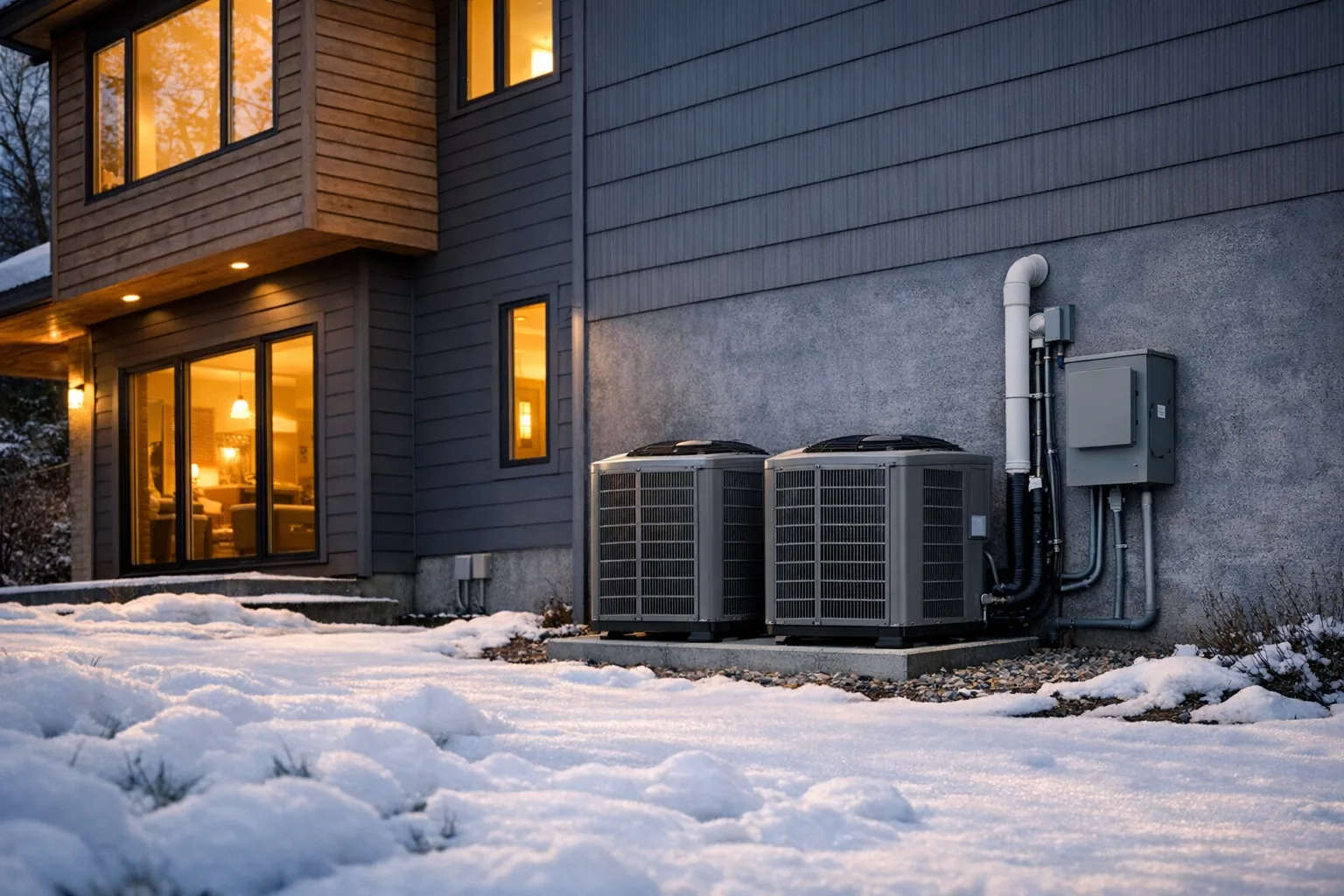
The $4,000 Rebate That Just Rewrote the Rules on Furnace Replacement
In 2026, the federal government will hand homeowners up to $4,000 in heat pump rebates under the Inflation Reduction Act. That single number obliterates the traditional cost advantage of gas furnaces in cold climates and forces a complete rethink of how American homeowners should approach heating system replacement this year.
Price-Quotes Research Lab spent three months analyzing 2026 pricing data, regional fuel costs, and incentive structures to deliver the most comprehensive furnace replacement cost breakdown available. The verdict: geography still dominates the decision, but the old rules no longer apply.
Furnace and Heat Pump Costs at a Glance
Before diving into climate-specific recommendations, here are the baseline numbers every homeowner needs:
- Heat Pump (Air-Source): $4,000–$12,000 equipment; $7,000–$15,000+ installed
- Gas Furnace (Standard): $2,500–$5,000 equipment; $3,500–$7,500 installed
- Gas Furnace (High-Efficiency): $4,000–$9,000 equipment; $5,500–$11,500 installed
- Electric Furnace: $1,500–$4,000 equipment; $3,000–$6,000 installed
- Dual-Fuel Heat Pump: $5,000–$14,000 installed (heat pump + gas backup)
Installation labor typically runs $2,000–$8,000 depending on complexity, electrical upgrades, venting requirements, and whether ductwork modification is necessary. AC Direct's 2026 analysis confirms these ranges align with current market conditions across major U.S. metropolitan areas.
The Heat Pump vs. Gas Furnace Question Has Changed Permanently
The heat pump vs. gas furnace calculus used to be straightforward: cold climates meant gas, warm climates meant heat pumps. That framework collapsed in 2024 and shows no signs of returning. EnergyRebateCalculator's 2026 analysis identifies three forces that demolished the old rules:
- Cold-climate heat pump technology now operates efficiently at temperatures as low as -15°F with proper unit selection. The technology that once struggled in Minneapolis now thrives there.
- Natural gas price volatility has erased the operating cost advantage that made gas furnaces the default choice in northern states. Henry Hub spot prices swung 40% in 2025 alone.
- Incentive restructuring under the Inflation Reduction Act creates rebates up to $4,000 for heat pump installation, with additional utility and state-level programs stacking on top in many regions.
2026 Furnace Replacement Costs by Fuel Type
Natural Gas Furnaces
Natural gas furnaces remain the most common central heating choice in the United States, commanding roughly 45% of the market. HomeGuide's 2026 pricing data places standard-efficiency gas furnaces at $3,500–$5,500 installed, with high-efficiency (95%+ AFUE) models ranging from $6,500–$11,500.
The efficiency math matters here. A 80% AFUE furnace converts 80 cents of every dollar of fuel into usable heat. A 95% AFUE model extracts 95 cents. Over a 15-year lifespan with average usage, the efficiency premium on a high-efficiency unit typically recovers its additional cost—but only if natural gas prices remain stable or rise.
Key cost variables for gas furnace installation:
- Venting type: Atmospheric venting costs less than direct venting or power venting. High-efficiency furnaces require sealed combustion, adding $500–$1,500 to installation costs.
- Existing infrastructure: Homes with functioning gas lines and proper ductwork see the low end of installation estimates. Conversions from electric heat or oil heat can add $2,000–$5,000.
- Permits and inspections: $100–$1,000 depending on locality, with some jurisdictions requiring engineering reviews for high-efficiency units.
Electric Furnaces
Electric furnaces cost less upfront than any other central heating option. Equipment runs $1,500–$4,000, with total installation costs of $3,000–$6,000 for most single-family homes. Kukun's 2026 HVAC cost guide confirms these figures represent the lowest entry point in the market.
The problem is operating cost. Electricity priced at the national average of $0.13 per kWh costs roughly three times more per BTU than natural gas. An electric furnace in a 2,000-square-foot home in Chicago's climate can generate $2,000–$3,000 in annual heating bills compared to $800–$1,200 for a gas furnace.
Electric furnaces make economic sense only in three scenarios:
- Supplemental heating for a small addition or zone
- Regions with unusually low electricity rates (parts of the Pacific Northwest with hydroelectric power)
- As backup heat within a dual-fuel heat pump system
Heat Pumps: The Complicated Favorite
Heat pumps deserve their reputation as the future of residential heating, but "heat pump" encompasses a vast range of equipment with dramatically different capabilities and price points. Design Transition Studio's 2026 cost breakdown clarifies the landscape:
- Standard air-source heat pump: $4,000–$8,000 equipment; works best above 30°F
- Cold-climate heat pump: $7,000–$12,000 equipment; rated for temperatures as low as -15°F
- Ductless mini-split: $3,000–$10,000 for single-zone; $7,000–$20,000+ for multi-zone systems
- Dual-fuel hybrid: $6,000–$14,000 equipment; pairs heat pump with gas furnace backup
The critical insight is that a heat pump replaces both your furnace and your central air conditioner. If your AC unit is also approaching end-of-life, comparing a heat pump's total cost against a gas furnace alone creates a false economy. You're essentially comparing one system against two.
Climate Zone Analysis: Where Each System Wins
Southern Climate Zones (Zones 1-2: Florida, Texas, Arizona, Southern California)
In these zones, the decision is straightforward: heat pumps dominate by every metric. Cooling dominates heating load, efficiency ratings favor heat pump operation, and natural gas infrastructure is often limited or unnecessary.
2026 Recommendation: Air-source heat pump. The federal 25C tax credit covers 30% of equipment and installation costs with no upper limit. A $10,000 installation generates a $3,000 credit. Combined with utility rebates that many southern utilities offer, total incentives can reach $4,000–$6,000.
Annual operating costs run $800–$1,400 depending on electricity rates, compared to $900–$1,600 for equivalent gas systems (when accounting for the need for separate AC).
Transitional Climates (Zones 3-4: Virginia, Tennessee, North Carolina, Central Texas, Parts of California)
These zones present the most interesting 2026 decision because both options work well. Heat pumps excel during shoulder seasons when temperatures hover between 40°F and 65°F. Gas furnaces outperform during the 20–30 days annually when temperatures drop below 30°F.
Green Watt Home's 2026 comparison analyzed 15 years of operating costs across transitional climates and found that heat pumps save $2,000–$5,000 over their lifespan when natural gas prices remain at or above 2025 levels.
2026 Recommendation: Heat pump unless you have exceptionally low gas rates or an existing gas infrastructure you want to utilize. The rebate landscape makes heat pump economics compelling even if your gas furnace is only 8–10 years old.
Cold Climates (Zones 5-7: Minnesota, Wisconsin, Michigan, Upstate New York, Colorado, Montana)
Here is where the 2026 calculus divergs most sharply from previous years. Cold-climate heat pumps now operate efficiently at temperatures far below anything the northern United States typically experiences. A properly sized cold-climate unit will meet 90–95% of heating needs without supplemental heat, even in Minneapolis or Burlington.
However, gas furnaces retain advantages in three specific scenarios:
- Extreme cold events: When polar vortex conditions push temperatures to -20°F or below for multiple days, even cold-climate heat pumps experience efficiency degradation. A gas furnace provides reliable backup.
- Existing gas infrastructure: If your home already has gas lines, a gas furnace installation costs $2,000–$4,000 less than a comparable heat pump system.
- Utility rate structures: Some northern utilities charge dramatically lower rates for natural gas than electricity, preserving gas's operating cost advantage.
The $4,000 federal rebate changes this calculation. For a homeowner in Zone 5 replacing an aging gas furnace, choosing a heat pump with gas backup (dual-fuel system) can generate $3,000–$4,000 in upfront incentives while capturing the efficiency benefits of heat pump operation during 85% of heating hours.
2026 Recommendation: Dual-fuel hybrid system for most homeowners. You get heat pump efficiency during normal winter operation plus gas furnace reliability during extreme cold. The federal rebate and state-level programs typically cover 30–50% of total system cost.
Marine Climates (Pacific Northwest, Coastal Pacific)
These zones present a unique case. Mild temperatures year-round mean heating demand is moderate, but electricity rates in these regions are often below the national average due to hydroelectric generation. NuWatt Energy's 2026 analysis identifies Pacific Northwest electricity rates as low as $0.08–$0.10 per kWh in many areas, fundamentally altering operating cost calculations.
At these rates, heat pump operating costs match or beat natural gas on a per-BTU basis, while equipment costs have narrowed with gas furnaces.
2026 Recommendation: Heat pump. The mild climate means a standard (non-cold-climate) unit handles virtually all heating needs, keeping equipment costs at the lower end of the range. Combined with regional utility rebates from PSE&G, Portland General Electric, and Seattle City Light, total incentives can exceed $5,000 in some areas.
Operating Cost Reality: What You'll Actually Pay Annually
Fixr's 2026 cost analysis provides detailed annual operating cost estimates by system type and climate zone:
| System Type | Warm Climate (TX, FL) | Transitional (VA, NC) | Cold Climate (MN, WI) |
|---|---|---|---|
| Heat Pump | $700–$1,200 | $1,000–$1,600 | $1,400–$2,000 |
| Gas Furnace (Standard) | $900–$1,400 | $1,100–$1,700 | $1,500–$2,200 |
| Gas Furnace (High-Efficiency) | $700–$1,100 | $900–$1,400 | $1,200–$1,800 |
| Electric Furnace | $1,400–$2,200 | $2,000–$3,000 | $2,800–$4,000 |
These estimates assume a 2,000-square-foot home with average insulation and usage patterns. Your actual costs will vary based on insulation quality, thermostat habits, and local utility rates.
The Total Cost of Ownership Calculation
Price-Quotes Research Lab recommends evaluating furnace and heat pump purchases on a 15-year total cost of ownership basis rather than focusing solely on upfront costs. This calculation includes:
- Equipment and installation costs (minus rebates and tax credits)
- Annual fuel/energy costs over 15 years
- Estimated maintenance costs ($150–$400 annually for most systems)
- Projected repair costs for aging equipment (gas furnaces typically need $500–$1,500 in repairs between years 12–18)
- Equipment replacement timeline differences
Using this framework, a $8,000 heat pump installation with $1,200 annual operating costs ($18,000 over 15 years) plus $3,000 in maintenance totals $29,000. A $5,500 gas furnace with $1,800 annual operating costs ($27,000 over 15 years) plus $4,000 in maintenance and early replacement risk totals $36,500—before accounting for the possibility of also replacing your AC unit separately during that period.
When to Replace Your Furnace in 2026
Ecostify's 2026 HVAC guide identifies five clear signals that replacement is more economical than repair:
- Age exceeds 15 years: Most gas furnaces last 15–20 years. Once you cross 15, repair costs increase exponentially while efficiency continues declining.
- Repair cost exceeds 50% of replacement cost: If fixing your furnace costs more than half what a new unit would set you back, replacement wins every time.
- Natural gas prices have doubled since installation: Older furnaces rated at 80% AFUE were designed for a different fuel cost environment. High-efficiency replacement pays for itself faster at current prices.
- Your AC is also over 10 years old: Replacing both with a heat pump simultaneously captures maximum rebates and eliminates the cost of replacing your AC in 3–5 years.
- You're planning to stay in the home 7+ years: Below 7 years, the math rarely works for anything except emergency failures. Above 10 years, the decision becomes increasingly obvious.
Navigating the 2026 Rebate Landscape
The Inflation Reduction Act created the most generous federal incentives for heating system replacement in American history. BuiltRight HQ's 2026 incentive guide breaks down the key programs:
- High-Efficiency Electric Home Rebate Act (HEEHRA): Up to $4,000 for heat pump installation, income-qualified households receive higher amounts
- 25C Tax Credits: 30% of heat pump equipment and installation costs, uncapped for heat pumps, capped at $600 for other HVAC improvements
- State-Level Programs: 23 states have implemented additional utility rebate programs on top of federal credits
These incentives have fundamentally changed the payback period for heat pump installation. A dual-fuel system that once took 12 years to pay back through energy savings now pays back in 5–7 years for most homeowners in incentive-eligible income brackets.
Installation Variables That Will Surprise You
This Old House's 2026 furnace cost analysis identifies installation factors that consistently exceed homeowner expectations:
Electrical upgrades: Heat pumps, particularly cold-climate models, often require 200-amp electrical service. Homes built before 1990 frequently have 100-amp or 150-amp panels. Upgrading costs $1,500–$4,000 and frequently becomes the largest single line item beyond equipment.
Ductwork modification: Heat pumps operate at lower supply air temperatures than gas furnaces. This sounds like a benefit (less extreme cold air in winter) but requires proper duct sizing. Many homes built for gas furnaces have ducts sized for higher-temperature output. Retrofitting ducts adds $2,000–$6,000 to installation costs.
Permitting delays: Several major metropolitan areas have created expedited permitting processes for heat pump installation to meet climate goals. Others have done the opposite, requiring extensive engineering reviews that add 4–8 weeks to project timelines. Always check local requirements before signing installation contracts.
The Bottom Line: Your 2026 Furnace Replacement Decision
Price-Quotes Research Lab's analysis points to three clear conclusions for 2026:
First: Heat pump technology has reached a maturity threshold where geography no longer disqualifies any region from considering electric heat. Even in Minnesota, a properly selected cold-climate heat pump handles the vast majority of heating loads efficiently.
Second: The rebate landscape creates a once-in-a-generation opportunity for homeowners to upgrade heating systems at dramatically reduced out-of-pocket cost. The $4,000 federal rebate plus state and utility programs means total incentives of $4,000–$8,000 for most installations.
Third: The old rules are dead. Assuming you need gas heating because you live in a cold climate ignores the technological and economic transformations of the past 36 months. The question isn't whether a heat pump can work in your climate—it's whether the total cost of ownership math favors one system over another in your specific situation.
Run the numbers for your home, factor in available rebates, consider your plans for staying in the home, and make the decision based on 15-year economics rather than first-year costs. Your wallet will thank you in 2030.