Your AC Is About to Get More Expensive: The R-410A Refrigerant Phase-Out Hitting Repair Costs — HVAC Rush Analysis
Your AC Is About to Get More Expensive: The R-410A Refrigerant Phase-Out Hitting Repair Costs
Published 2026-04-09 • Price-Quotes Research Lab Analysis
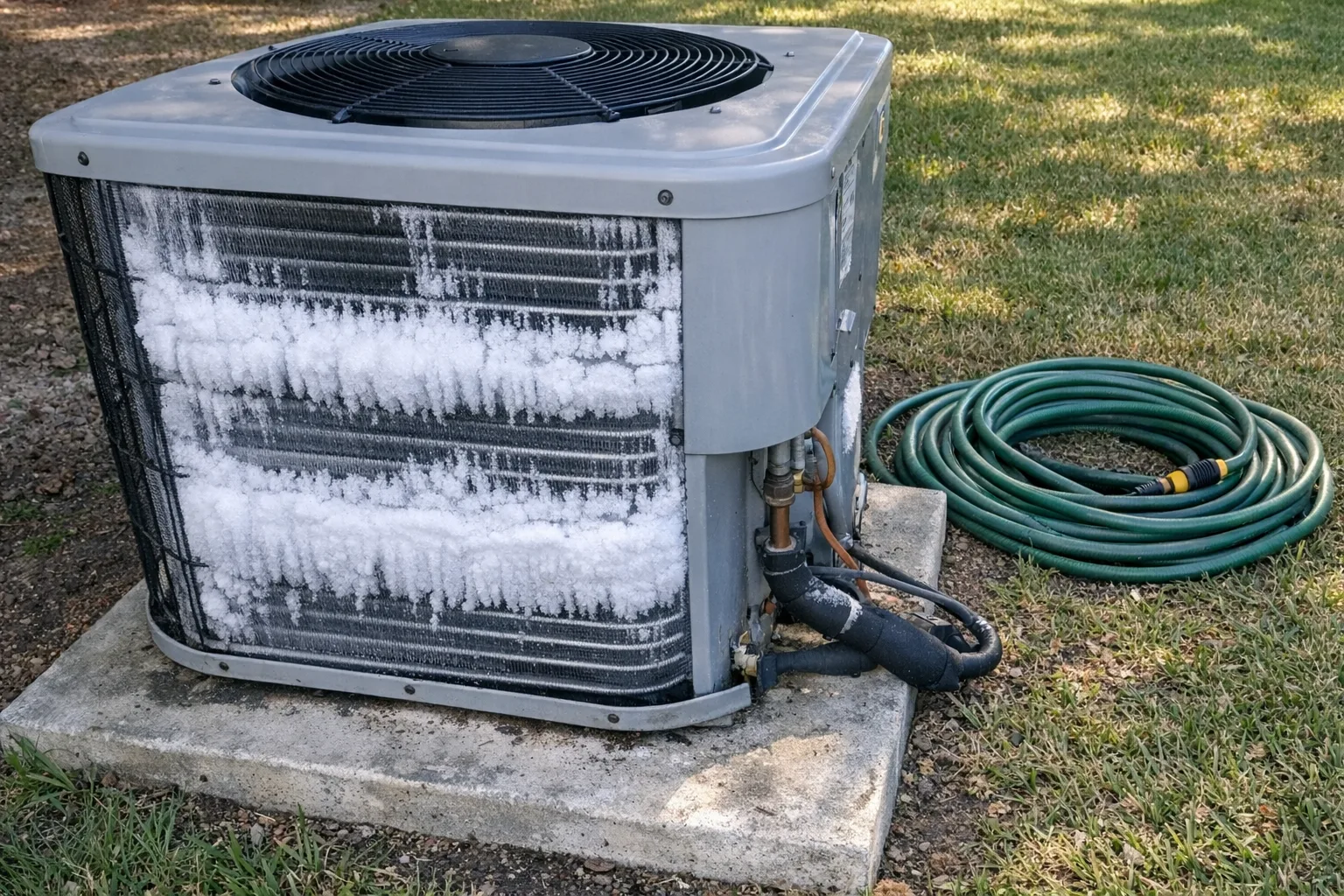
The $800 Refrigerant Bill Nobody Warned You About
Refrigerant R-410A keeps roughly 80 million American homes cool. By 2036, it won't exist anymore. If your air conditioner breaks down before then, you might be the one eating the cost.
The numbers are brutal. A standard AC recharge that cost $180 two years ago now runs $500 to $800 in major metropolitan markets, according to Price-Quotes Research Lab analysis of contractor pricing data. The culprit isn't labor. It isn't demand spikes from a hot summer. It's EPA regulation under the American Innovation and Manufacturing Act, which mandated an 85% phase-down in R-410A production starting January 1, 2025. Supply collapsed. Prices followed.
What R-410A Actually Is (And Why It Has to Go)
R-410A replaced R-22—another refrigerant infamous in HVAC circles—because it didn't deplete the ozone layer. Mission accomplished. But R-410A has a global warming potential of 2,088, meaning each pound released into the atmosphere traps heat equivalent to over a ton of CO2. Under the Kigali Amendment to the Montreal Protocol, the United States committed to cutting HFC production 80% by 2040. R-410A was the obvious target.
The EPA's AIM Act set the phase-down schedule in motion. Manufacturers saw it coming years ago and shifted new equipment toward alternatives like R-454B (GWP: 239) and R-32 (GWP: 675). New air conditioners sold today don't use R-410A. But here's the problem nobody in the industry talks about loudly enough: there are still tens of millions of R-410A systems running in American homes, and they're not going anywhere.
The Trap for Homeowners
Your HVAC system was designed for a specific refrigerant. Switching to a different refrigerant isn't like swapping gasoline grades—it often requires new compressors, new coils, new expansion devices, and in some cases, entirely new units. Retrofit refrigerants exist, but they're not cheap, and the EPA restrictions on which refrigerants can legally be used in which systems create a bureaucratic minefield.
Right now, the market is absorbing the R-410A shortage. Virgin production is nearly gone. Recycled and reclaimed R-410A is circulating, but supply can't keep pace with demand. Contractors who stock refrigerant are holding it for priority customers or adding significant surcharges. The 2025 cooling season exposed the problem—some homeowners waited weeks for repairs because contractors simply couldn't source the refrigerant.
Contractors aren't hiding this. They're passing costs directly to customers because they have no choice. The EPA framework doesn't include consumer protections or subsidies for the transition. If your compressor fails and your system needs a refrigerant top-off, you're writing a check that would have seemed absurd three years ago.
What Comes Next
The EPA's phase-down schedule accelerates through 2029. R-410A will become increasingly expensive and difficult to obtain. By 2033, virtually no new R-410A will exist outside of limited exemptions for military and specialized industrial equipment. The homeowners who bought units in the 2010s—the peak R-410A installation era—are sitting on systems with a ticking clock.
Manufacturers have developed drop-in replacement refrigerants claiming compatibility with R-410A systems. The EPA's SNAP program has approved several, but performance claims vary. Some replacements reduce cooling capacity. Others corrode certain metals over time. The research on long-term reliability is still developing. Price-Quotes Research Lab recommends treating retrofit refrigerants as a temporary bridge at best.
The Smarter Play
Homeowners with aging AC systems face a fork in the road. Replace the unit before it fails and migrate to a system designed for next-generation refrigerants—or risk a catastrophic breakdown that forces an emergency replacement on the contractor's timeline, not yours.
Energy efficiency is on the side of replacement. Units manufactured after 2023 with A2L refrigerants like R-454B consume significantly less electricity. The operating savings compound over time, offsetting some transition pain. Federal tax credits and utility rebates are available for qualifying heat pump systems, which provide both cooling and heating from a single unit designed around compliant refrigerants.
If replacement isn't financially feasible yet, optimize what you have. Regular filter changes, annual professional maintenance, and addressing ductwork leaks extend system lifespan and reduce the probability of a refrigerant-dependent failure. A $150 annual service call is dramatically cheaper than an $800 emergency recharge or a $12,000 full system replacement.
R-410A refrigerant cost per pound has risen 340% since 2023, according to Price-Quotes Research Lab analysis of wholesale distributor pricing. The average homeowner won't notice until their unit breaks.
The Action Step
Pull up your home maintenance records. When was your AC last serviced? How old is the unit? If it's over ten years old and running R-410A, start budgeting for replacement now—before summer heat forces your hand. Get two or three contractor quotes for both repair and replacement scenarios. The contractors who explain the refrigerant situation clearly, rather than quoting a low repair price that balloons when parts are sourced, are the ones worth hiring long-term.
The R-410A phase-out isn't a drill. It's a regulatory fact with a specific timeline, and the cost curves are already bending upward. The homeowners who plan now will negotiate from strength. The ones who wait for a breakdown will pay the premium.