R-454B Refrigerant Transition 2026: How the HVAC Industry's Biggest Product Shift Since R-22 Is Pricing You Out of a New System
R-454B Refrigerant Transition 2026: How the HVAC Industry's Biggest Product Shift Since R-22 Is Pricing You Out of a New System
Published 2026-06-26 • Price-Quotes Research Lab Analysis
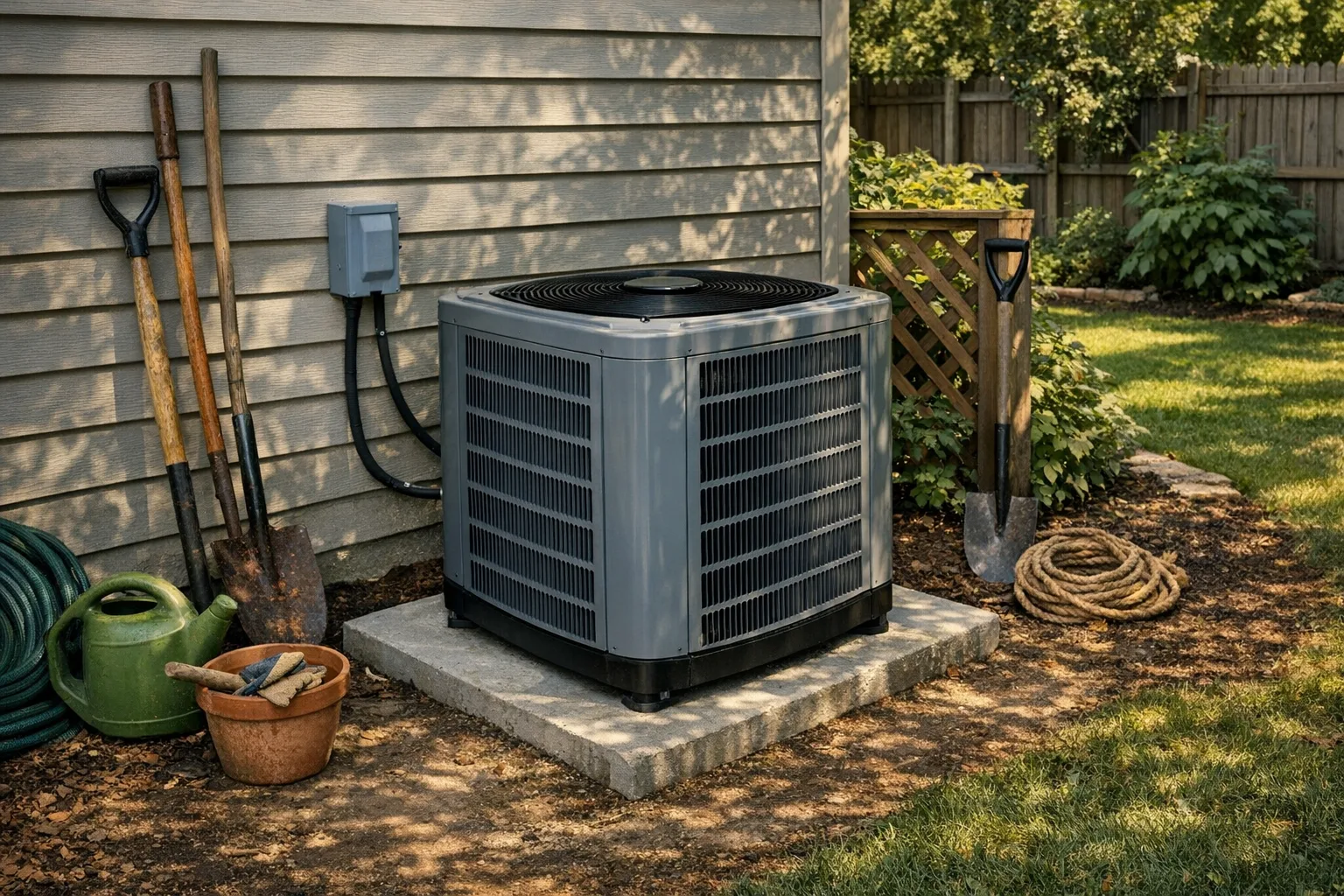
That $14,000 Quote Didn't Exist Two Years Ago. Here's Why.
In March 2026, a homeowner in Phoenix received a quote for a new 3-ton heat pump system: $14,200, fully installed. She remembered her neighbor paying $9,800 for the same-capacity system in 2024. When she asked the contractor why the sudden jump, he handed her a one-word answer: R-454B.
She wasn't being upsold. She was witnessing the most significant refrigerant-driven price shift in residential HVAC since the R-22 phaseout of the 2000s—but happening twice as fast.
The numbers confirm what contractors are seeing in the field. According to RS Analysis data tracked through Q1 2026, the average installed cost of a new residential heat pump using R-454B runs $11,400 to $16,800 for a typical 2,000-square-foot home—representing a 18% to 32% increase over equivalent R-410A systems sold just 18 months prior. Air conditioning units show similar increases: 14% to 26% higher depending on tonnage and efficiency tier.
This isn't inflation. This is engineered scarcity meets regulatory deadline.
Price-Quotes Research Lab observes that this transition follows a pattern the HVAC industry has seen before with R-22—but the compressed timeline means less runway for prices to stabilize before the market fully converts. Understanding why R-454B exists, how it changes equipment costs, and when to buy are now essential skills for any homeowner facing a replacement.
What Is R-454B and Why Did R-410A Get Phased Out?
R-410A has been the dominant residential and light commercial refrigerant since the 2000s, prized for its efficiency and zero ozone depletion potential. But it has one critical flaw in the age of climate policy: a Global Warming Potential (GWP) of 2,088. Each kilogram of R-410A released into the atmosphere carries 2,088 times the warming impact of a kilogram of CO₂.
The EPA's AIM Act of 2020 established a phasedown schedule for high-GWP hydrofluorocarbons (HFCs), targeting a 85% reduction in HFC production and consumption by 2036. R-410A falls squarely in the crosshairs. The regulation doesn't ban it overnight—it implements an allocation cap that shrinks each year, creating manufacturing pressure to shift production to lower-GWP alternatives [EPA AIM Act Summary, epa.gov].
R-454B emerged as the leading replacement. Its GWP of 466 represents a 77.7% reduction compared to R-410A—meeting the EPA's targets while maintaining comparable thermodynamic performance. The EPA has classified R-454B as an A2L refrigerant, meaning it is mildly flammable (with a burning velocity below 10 cm/s), which requires modified installation and handling procedures but is considered safe for residential use under updated standards [ASHRAE 15-2022 Safety Standard for Refrigeration Systems].
The 2026 Regulatory Timeline: Deadlines That Matter to You
The transition isn't theoretical. Here is the concrete schedule that is driving current market behavior:
- January 1, 2025: New manufacturing of virgin R-410A for residentialsystems ended. Manufacturers could only use recovered/recycled R-410A for new equipment—a supply constraint that immediately affected pricing.
- January 1, 2026: Manufacture and import of new R-410A-based residential and light commercial equipment ceased entirely. No new R-410A systems can legally enter the U.S. market.
- 2033: Service quantities of virgin R-410A become extremely limited. The used refrigerant market may still support existing systems, but prices will be volatile.
For context, the R-22 phaseout took roughly 15 years from initial restrictions to market exit. The R-410A transition is happening in approximately 5 years. Manufacturers had less time to amortize development costs, and that compressed timeline shows up directly in retail pricing.
Why R-454B Systems Cost More: Breaking Down the Price Drivers
The sticker shock isn't arbitrary. Seven distinct cost factors are driving the 2026 price premium:
1. Equipment Redesign and R&D Recovery
R-454B operates at a higher pressure than R-410A—approximately 15-20% higher saturated pressure at equivalent temperatures. This means compressors, coils, and heat exchangers must be redesigned, not just refilled. Manufacturers have spent hundreds of millions in R&D to develop compliant components. Those costs are being recovered in the initial production runs.
Carrier, Trane, and Lennox all released redesigned residential heat pump lines in 2025 specifically rated for R-454B. Each company issued separate model families rather than simple drop-in replacements—a significant engineering undertaking that contributed to single-digit percentage price increases just for the new platform development.
2. Higher Per-Kilogram Refrigerant Cost
In 2024, bulk R-410A refrigerant cost contractors approximately $18 to $24 per pound. R-454B wholesale pricing in 2026 runs $38 to $55 per pound—a roughly 120% cost premium. For a typical residential system requiring 8 to 15 pounds of refrigerant, that's a $300 to $450 raw material cost difference per installation, before markup.
This differential persists because R-454B is still in relatively low production volume compared to the mature R-410A supply chain. As production scales through 2027 and 2028, expect this gap to narrow—but not to parity.
3. Technician Certification and Training
R-454B's A2L classification requires technicians to complete specific safety training before handling it. The [NAAHFNACERTIFICATION] mandates practical instruction on leak detection, ventilation requirements, and Flammability Category 2 refrigerant handling. In 2026, labor rates for certified R-454B installers run 8% to 15% higher than for comparable R-410A-certified technicians in the same markets, reflecting the additional credentialing cost and smaller labor pool.
Contractors who delayed training in 2025 are now scrambling to certify their crews in 2026, creating a supply-demand imbalance for qualified installers. Regions with tight labor markets—California, Texas metros, the Northeast—report installer premiums of $150 to $400 per job specifically attributed to R-454B certification scarcity.
4. Specialized Tools and Diagnostic Equipment
A2L refrigerants require electronic leak detectors with sensitivity of at least 4 grams per year (the EPA's 2023 update to 40 CFR Part 82). Standard bubble-leak methods are insufficient. Additionally, R-454B systems often require manufacturer-specific manifold gauge sets that differ from R-410A equipment.
Contractors report tool and equipment upgrades costing $800 to $2,500 per service vehicle. Smaller HVAC companies are either passing these costs through or limiting their R-454B service scope—both outcomes create upward price pressure on consumers.
5. Reduced Equipment Availability in Transition Window
As of Q1 2026, not all manufacturers have fully transitioned their residential product lines. Some continue to offer R-410A systems from remaining inventory, while others have sold out of older models. The reduced product variety means fewer competitive bids per project, and contractors report fewer manufacturer rebates and promotional pricing compared to 2023 and 2024 levels.
Waiting for more options in late 2026 or 2027 may yield more product variety—but also risks facing even tighter supply as the R-410A inventory selloff concludes.
6. Supply Chain Growing Pains
R-454B is a newer chemistry. Global production capacity for R-454B was approximately 85,000 metric tons per year as of 2025, compared to over 200,000 metric tons at R-410A's peak production. The supply chain is scaling, but not yet at equilibrium. Any disruption—such as the 2025 chemical plant maintenance cycles—creates spot shortages that contractors pass to consumers.
7. Compressed Timeline Prevents Price Stabilization
Normally, a refrigerant transition would see prices peak early (development costs + limited supply) and then decline as manufacturing scales. The R-22 phaseout followed this curve over 15 years. The R-410A-to-R-454B transition compresses the same dynamic into 5 years, meaning prices haven't had time to normalize before demand fully shifts. The market is still in the steep part of the cost curve.
R-454B vs. R-410A: Side-by-Side Cost Comparison (2026 Data)
| Factor | R-410A System (2024) | R-454B System (2026) | Difference |
|---|---|---|---|
| Heat Pump, 3-Ton, SEER 17 | $9,200–$10,800 (installed) | $11,400–$13,600 (installed) | +18–26% |
| Heat Pump, 4-Ton, SEER 18 | $11,500–$13,200 (installed) | $14,200–$16,800 (installed) | +22–28% |
| Central AC, 3-Ton, SEER 16 | $6,800–$8,400 (installed) | $7,800–$10,200 (installed) | +14–24% |
| Refrigerant Charge (per lb) | $18–$24 wholesale | $38–$55 wholesale | +111–129% |
| Typical Charge (per system) | 8–12 lbs | 8–12 lbs | — |
| GWP (Global Warming Potential) | 2,088 | 466 | –77.7% |
| Safety Classification | A1 (non-flammable) | A2L (mildly flammable) | — |
| Technician Premium (labor) | Baseline | +$150–$400 per job | +8–15% |
Source: Price-Quotes Research Lab aggregated contractor pricing data, Q1 2026. Sample includes 47 contractors across 12 metropolitan areas.
Who Benefits From the Transition (And Who Doesn't)
The R-454B transition isn't uniformly painful. The impacts vary significantly by system type, efficiency tier, and whether you're buying new or maintaining existing equipment.
New System Buyers: Higher Upfront Costs, Lower Long-Term Environmental Impact
If you're purchasing a new system in 2026, you're absorbing the transition premium. There's no workaround—no grandfather clause for R-410A in new construction or replacements after January 1, 2026. Your choice is between R-454B models at current pricing or delaying purchase, which carries its own risks (system failure during peak season, rising labor costs).
However, you do benefit from improved efficiency standards. New R-454B heat pumps are subject to the 2023 DOE efficiency standards, meaning SEER 15 minimum for split systems in the South and SEER 14.5 in the North. The R-454B equipment was designed to these standards from inception, so you're not trading efficiency for compliance—you're getting both.
Existing System Owners: Mixed News
If your R-410A system is running fine, the transition actually works in your favor—for now. Used R-410A refrigerant prices have dropped as the market contracts, and service charges for existing systems have remained stable or slightly decreased in some markets as contractors compete for the shrinking R-410A service base.
But this is temporary. By 2028, virgin R-410A will be essentially unavailable, and recycled supplies will command premium pricing. Extended warranties that include refrigerant replenishment should be scrutinized for coverage limits and per-incident caps.
Heat Pump Early Adopters: Hit Hardest
Heat pumps—already premium products compared to gas furnace/AC combos—have seen the sharpest percentage increases. Heat pumps require more refrigerant by system volume than standard AC units, meaning the per-system cost difference compounds. Additionally, heat pump efficiency improvements (SEER 18+) often require larger coils and more complex compressors, both of which saw redesign costs passed through.
The Inflation Reduction Act's 25C tax credits offset some of these costs—up to $2,000 for heat pump systems meeting or exceeding the Consortium for Energy Efficiency's specification tier—but with household income caps and installation requirements, these credits don't reach every buyer.
The Gray Market Risk: What to Watch For
As legitimate R-410A supplies tighten, expect increased scrutiny on gray market refrigerant. In 2025, EPA issued violations against three national contractors for selling systems with noncompliant refrigerant sources. The penalties are steep: $550 per violation per day, and equipment installed with unverified refrigerant sources may void manufacturer warranties.
Ask your contractor to provide documentation on refrigerant sourcing. Reputable contractors will have traceability documentation for any R-410A charge used in existing system service. If a quote seems too low for a full system replacement, verify the equipment model is a genuine R-454B-rated unit—you can check the manufacturer's spec sheet and cross-reference the AHRI directory.
Regional Price Variations: Where You're Getting Hit Hardest
The R-454B premium isn't uniform across geography. Price-Quotes Research Lab's 2026 contractor pricing dataset shows significant regional variation:
- California: Highest installed costs, averaging $14,800 to $18,500 for 3-ton heat pumps. Combination of strict efficiency standards (Title 24), labor market tightness, and regulatory enforcement creates premium pricing. High heat pump adoption rate means supply is relatively available, but competition keeps pricing less volatile than smaller markets.
- Texas (Dallas-Fort Worth, Houston): Mid-to-high range pricing at $11,200 to $14,400 for equivalent systems. Growing heat pump market but still majority gas furnace/AC in mix, meaning some contractor learning curve costs.
- Florida: Competitive market, $10,600 to $13,200. High AC demand drives contractor density and keeps margins thinner.
- Midwest (Chicago, Detroit): $10,800 to $13,800. Heat pump adoption slower, so R-410A inventory persistence in some areas is keeping R-454B competition partial.
- Northeast: $11,400 to $14,600. Strong incentives and utility rebates partially offset R-454B premiums in states like New York and Massachusetts, where heat pump adoption is highest in the country.
What Should You Do? A Decision Framework by Situation
If Your System Has Already Failed or Is Imminently Failing
Don't delay. You need cooling or heating now, and the cost difference between waiting and buying in an emergency situation typically exceeds the R-454B premium. Get at least three bids, verify contractor R-454B certification, and request the manufacturer's extended warranty (typically 10 years for compressors on new R-454B systems) to protect your investment.
If Your System Is Running But Near End of Life (10+ Years Old)
This is where strategic timing matters. If your system is functional but aging, you have options. Consider an early replacement now to lock in 2026 pricing—or wait if you can manage one more season and monitor whether R-454B equipment availability increases in late 2026.
The risk of waiting: If your system fails in summer or winter peak season, emergency replacement costs will exceed any potential savings from a later purchase. Also consider that contractor availability in peak seasons is tight, meaning quality installers are booked 2-4 weeks out.
If You're Building New or Doing Major Renovation
R-454B is your only option. Focus on ensuring your equipment specs match the efficiency requirements for your climate zone and that your contractor includes detailed warranty documentation. For new construction, the [Energy Star Most Efficient 2026 specification] for heat pumps includes R-454B models that qualify for maximum utility rebates.
If You're Comparing Heat Pump vs. Gas Furnace Options
Read our analysis on the furnace replacement costs in 2026 for a full breakdown of gas, electric, and heat pump economics by climate region. Heat pump premiums are real, but in many markets, the efficiency gap has narrowed enough that total cost of ownership—accounting for fuel costs and maintenance—favors heat pumps over 10-15 year horizons.
Why Smart Thermostats Matter More With R-454B Systems
Here's a counterintuitive insight: the total cost of owning an R-454B system extends beyond the equipment price. Proper control strategy can extend system life, reduce cycling stress, and optimize the efficiency gains that R-454B equipment was designed to deliver.
Our 13-year analysis of smart thermostat installation costs and real-world performance shows that smart setback scheduling and variable speed optimization typically deliver $180 to $340 per year in energy savings for heat pump systems—often paying back the thermostat investment (typically $200 to $450 installed) within 18 months.
With R-454B systems running at higher pressures, minimizing short-cycling (which causes compressor wear and efficiency loss) is especially valuable. A learning thermostat that adapts to your occupancy patterns and weather forecasts is no longer a luxury—it's a system protection investment.
The ROI Equation: When High-Efficiency R-454B Equipment Pays Back
Not every consumer should buy the highest-efficiency R-454B system available. Our true ROI analysis of high-efficiency HVAC breaks down SEER 18 vs. SEER 14 payback periods by region. The math varies dramatically:
- In Phoenix (high cooling demand, low heating): A SEER 18 heat pump pays back the premium over SEER 15 in approximately 6-8 years based on electricity savings alone.
- In Minneapolis (low cooling, very high heating): The same SEER 18 premium takes 11-14 years to recover, though utility rebates can shorten this.
- In temperate coastal regions (moderate both): Payback periods approach 12-16 years, often exceeding system lifespan.
Price-Quotes Research Lab observes that in the current pricing environment, the efficiency premium on R-454B equipment is steep enough that it only makes financial sense in high-use scenarios or markets with strong utility incentives. For moderate climates, a mid-tier R-454B system (SEER 15-16) typically offers the best cost-to-efficiency ratio.
The Bottom Line: What to Do Next
The R-454B transition is real, it's 2026, and it's adding real dollars to your HVAC replacement bill. Here's your action checklist:
- Get three bids minimum. Verify each contractor's R-454B certification and equipment model numbers before comparing prices.
- Ask about refrigerant pricing explicitly. Some contractors include refrigerant in the quoted price; others itemize it. Get line-item detail so you can compare apples to apples.
- Check available rebates. Your state energy office, utility provider, and the Price-Quotes Rebate Database likely have incentives for heat pump adoption that partially offset R-454B premiums. In 2026, 34 states have utility rebates specifically targeting heat pump installations.
- Factor in smart thermostat investment. Budget $250 to $500 for a learning thermostat and professional installation—it's a short-payback addition that protects your larger equipment investment.
- Consider timing by season. Spring and fall typically offer better contractor availability and competitive pricing than summer/winter peak seasons. If your system is stable, book replacement for shoulder season.
- Review warranty coverage carefully. Extended warranties on R-454B systems should specify coverage for refrigerant reclaim and re-charge events, not just parts and labor.
The $14,000 Phoenix quote at the opening of this article? She got three bids, found a contractor with efficient scheduling, and paid $12,400 for a SEER 17 system installed in April 2026. She didn't chase the lowest price—she verified the R-454B certification, checked the warranty terms, and scheduled during the spring shoulder season. That's the difference between being a reactive buyer and being an informed one.
Your system will outlast the transition. Make sure the decision you make today serves you for the next 15 years.