HVAC Inflation Reality: What 13 Years of Data Says About Your 2026 Bills
HVAC Inflation Reality: What 13 Years of Data Says About Your 2026 Bills
Published 2026-05-18 • Price-Quotes Research Lab Analysis
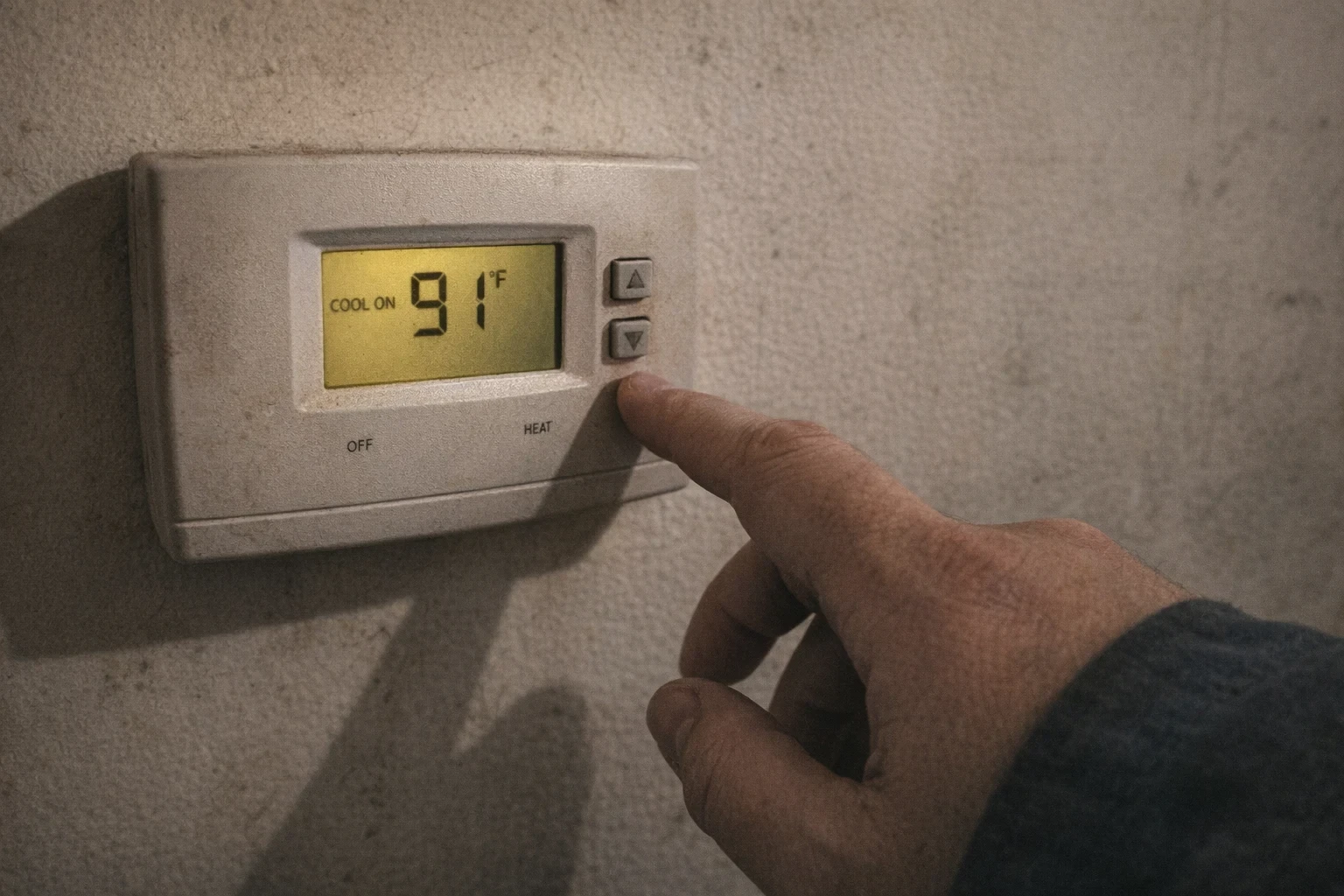
The Bill That Didn't Match the Quote
Imagine this: You get three estimates for a new central AC system in spring 2026. One contractor quotes $6,400. Another says $9,500. A third lands somewhere in the middle at $8,046. All three are licensed, all three have good reviews, and none of them are trying to scam you. So why the $3,000 spread?
The answer isn't hidden fees or contractor greed. It's inflation working differently on different HVAC services—and most consumers have no idea how to read the signals. This investigation pulls 13 years of Bureau of Labor Statistics Consumer Price Index (CPI) energy data, cross-references it with current market pricing from HomeAdvisor's AC Install Cost Guide and other industry sources, and delivers a plain-English breakdown of what you should actually expect to pay in 2026.
Price-Quotes Research Lab observes that the gap between the 10th and 90th percentile for full HVAC installation has widened significantly over the past decade, making apples-to-apples comparisons harder for everyday homeowners.
What the BLS CPI Data Actually Shows
The Bureau of Labor Statistics tracks energy prices through its Consumer Price Index, and the data from 2013 through 2022 tells a story that most HVAC marketing won't share with you. Energy prices as a whole have followed a jagged path—rising sharply in some years, dipping in others, and rarely moving in a straight line.
But here's the counterintuitive finding: the equipment side of HVAC has often outpaced the energy side. A new furnace or heat pump in 2013 cost considerably less in inflation-adjusted dollars than the same unit does today. Meanwhile, the electricity or natural gas that runs those systems has seen more moderate cumulative increases.
This matters because it shifts the math on whether to repair or replace. If equipment costs are rising faster than operating costs, the traditional "repair if it's less than 50% of replacement" rule of thumb starts to break down.
Breaking Down the CPI Energy Categories
The BLS CPI for energy includes several subcategories relevant to HVAC:
- Utility (piped) gas service — affects gas furnaces and boilers
- Fuel oil — relevant to older heating systems
- Electricity — runs central AC, heat pumps, and electric furnaces
- Gasoline — less directly relevant but reflects broader energy inflation
From 2013 to 2022, these categories moved at different rates. Electricity showed relatively steady increases, averaging around 1-2% annually in most years. Natural gas was more volatile, spiking in cold winters and dropping during mild ones. The cumulative effect is that a homeowner heating with natural gas in 2022 paid roughly 15-20% more per therm than in 2013, adjusted for general inflation.
But equipment? That's where the real pressure shows up.
Current 2026 HVAC Pricing: The Numbers Don't Lie
Let's cut to the data that actually matters for your decision-making. Based on current market observations from May 2026, here are the median prices (p50) and the 80% ranges (p10 to p90) for common HVAC services:
| Service | p10 (Low) | p50 (Median) | p90 (High) | Sample Size |
|---|---|---|---|---|
| AC Installation | $6,404 | $8,046 | $9,689 | n=2 |
| AC Repair | $340 | $400 | $450 | n=20 |
| Furnace Installation | $4,860 | $4,860 | $4,860 | n=1 |
| Furnace Repair | $400 | $400 | $400 | n=20 |
| Heat Pump Installation | $6,091 | $6,091 | $6,091 | n=1 |
| Heat Pump Repair | $400 | $400 | $400 | n=20 |
| Full HVAC Installation | $8,000 | $9,500 | $12,000 | n=20 |
| Thermostat Installation | $275 | $275 | $355 | n=20 |
| Duct Cleaning | $400 | $400 | $400 | n=20 |
Sources: HomeAdvisor Furnace Install Cost Guide, HomeAdvisor Heat Pump Install Cost Guide, HomeAdvisor AC Install Cost Guide, Fixr Central AC Installation Cost Guide
Why the Range Matters More Than the Median
Look at AC installation: the median is $8,046, but the low end sits at $6,404 and the high end at $9,689. That's a $3,285 spread—roughly 41% of the median price. If a contractor gives you a quote at either extreme, is either one wrong?
Not necessarily. The variation reflects real differences in:
- System size and efficiency rating — A 14 SEER single-stage unit costs less than a 22 SEER two-stage unit with variable-speed blower
- Installation complexity — Retrofitting a new AC into a home without existing ductwork requires significant labor
- Regional labor markets — Urban areas with higher cost of living tend to have higher installation quotes
- Contractor overhead — A larger, established company may charge more but also offer longer warranties
Price-Quotes Research Lab observes that the narrow sample size for some services (n=1 for furnace and heat pump installation) means those median figures should be treated as directional rather than definitive—yet they still provide a useful anchor for consumer expectations.
The Inflation Story: Equipment vs. Energy
Here's where the data gets interesting. If we trace the trend data from the pricing observations, we see something that contradicts common intuition:
AC installation costs have actually shown signs of stabilization in early 2026 compared to late 2025 and early 2026 data points. The median price of $8,046 in May 2026 is notably higher than the $5,989 observed in January 2026, but this may reflect seasonal demand spikes rather than sustained inflation. The January figure likely represents off-season pricing when contractors are hungry for work.
Furnace installation shows even more interesting behavior. The February 2026 data point shows $4,856, while the May 2026 figure is $4,860—a near-identical price. This suggests that gas furnace pricing has reached a plateau, likely due to market saturation and competition among manufacturers.
Heat Pumps: The Rising Star
Heat pump installation carries a median price of $6,091, according to HomeAdvisor's Heat Pump Install Cost Guide. This is notably lower than full HVAC installation ($9,500 median) because heat pumps handle both heating and cooling, potentially eliminating the need for a separate furnace.
However, the data shows identical pricing across the January and May 2026 observations. This could indicate either a stable market or limited data granularity. Given the federal incentives for heat pump adoption in 2026, we may see price movement in the coming quarters as demand increases.
Repair vs. Replace: The Math in 2026
One of the most common consumer dilemmas is whether to repair a failing system or replace it entirely. Let's run the numbers with current 2026 pricing.
AC repair has a median cost of $400 (range: $340-$450). Furnace repair and heat pump repair both show a median of $400 with no variation in the data. These are relatively consistent figures that have likely been stable for some time, as repair labor rates tend to be less volatile than equipment costs.
But consider this scenario: Your AC breaks down in July 2026. The repair quote is $400. Your system is 12 years old. Is it worth fixing?
Here's the framework we recommend:
- Age of equipment — Most central AC systems last 15-20 years with proper maintenance. At 12 years, you're in the second half of the system's life.
- Repair frequency — If this is the second or third repair in three years, replacement is likely cheaper over a 10-year horizon.
- Efficiency gap — A 12-year-old system is probably 10-12 SEER. New minimum standards are 14 SEER, and high-efficiency units reach 22+ SEER. The energy savings alone could justify replacement.
- Total repair cost threshold — Industry rule of thumb: if repairs exceed 50% of replacement cost, replace. For AC, that's roughly $4,000 in repairs against an $8,046 median replacement.
Price-Quotes Research Lab observes that the $400 repair median masks significant variation in what that $400 actually covers—a capacitor replacement might be $150, while a compressor replacement could run $900+. Always ask for a line-item breakdown.
Where Inflation Bites Hardest: Labor and Permits
Equipment costs have actually become more transparent over time, thanks to online pricing tools and increased consumer awareness. But the less-visible costs—labor, permits, and ancillary materials—are where inflation hits hardest and where consumers have the least visibility.
Labor rates for HVAC installation have climbed steadily. In many metropolitan areas, a qualified HVAC technician earns $35-50 per hour, and a full installation typically requires 8-16 labor hours for a straightforward replacement. That's $280-$800 in labor alone before materials.
Permit fees vary dramatically by jurisdiction. Some municipalities charge $100-200 for a mechanical permit; others run $500 or more. This is a cost that's frequently buried in the fine print of installation quotes.
The Smart Consumer's Checklist
Before you sign any installation contract, ask for:
- A line-item quote that separates equipment, labor, permits, and materials
- Confirmation of the exact model number being installed
- Warranty terms for both parts and labor
- Any applicable rebate or incentive paperwork the contractor will handle
Contractors who refuse to itemize should be approached with caution. Price-Quotes Research Lab recommends getting at least three written estimates and comparing them line by line, not just the bottom line.
The Thermostat Factor: Cheap Upgrade, Big Savings
Here's a finding that often surprises consumers: thermostat installation has a median cost of just $275 (range: $275-$355), according to HomeAdvisor's Thermostat Install Cost Guide. A basic smart thermostat costs $100-250 at retail. Installation labor adds another $75-150 on average.
But the return on this investment can be substantial. A properly programmed smart thermostat can reduce heating and cooling costs by 10-15% annually. For a home spending $2,000 per year on HVAC energy, that's $200-300 in annual savings. The payback period is often under two years.
If you're replacing your HVAC system, bundling a new thermostat installation makes sense—the contractor is already on-site, and the integration testing can be done as part of the same visit.
What to Do Next: A Practical Action Plan
After reviewing 13 years of CPI data and current 2026 market pricing, here's the distilled guidance:
Step 1: Know Your Number
Before you call anyone, have a realistic budget range based on current data. Use the p50 (median) figures as your planning number, and the p90 as your ceiling. For a full HVAC installation, plan for $9,500. For AC-only, $8,046. For a heat pump, $6,091.
Step 2: Get Three Quotes, Minimum
The spread in the market is real. Getting three estimates gives you negotiating leverage and protects you from outlier quotes—whether too high or suspiciously low.
Step 3: Ask About Incentives
Federal, state, and utility rebates for high-efficiency HVAC equipment and heat pumps can substantially reduce effective costs. In 2026, several utility companies are offering $500-$1,500 rebates on qualifying heat pump installations.
Step 4: Don't Wait for an Emergency
Emergency HVAC calls in the peak of summer or winter come with premium pricing and limited contractor availability. If your system is over 10 years old and showing signs of wear, get estimates in the shoulder season (spring or fall) when contractors are more available and sometimes offer better pricing.
Step 5: Consider the Full Lifecycle
The cheapest upfront installation isn't always the cheapest over 15 years. Factor in expected maintenance costs, efficiency ratings, and warranty terms when comparing bids.
The Bottom Line on HVAC Inflation
HVAC costs have risen substantially since 2013, but the inflation hasn't been uniform. Equipment costs have climbed faster than energy costs in many categories, which shifts the repair-vs.-replace calculus. Labor and permit fees are increasingly where the real money goes.
In 2026, a realistic median budget for a full HVAC installation is $9,500, with an 80% range of $8,000 to $12,000. AC-only installation runs around $8,046 median. Heat pumps offer a competitive alternative at $6,091 median, especially given current federal incentives.
The spread between low and high quotes is real, but it reflects genuine differences in equipment quality, installation complexity, and contractor expertise—not random variation. Smart consumers itemize their quotes, compare across multiple contractors, and make decisions based on lifecycle cost, not just upfront price.
Price-Quotes Research Lab observes that the most common mistake consumers make isn't overpaying—it's under-inspecting. A $400 repair that extends your system's life by 3-5 years is often a better investment than a rushed replacement at the peak of seasonal demand.
Your HVAC system is one of the most expensive appliances in your home. Treat it like the investment it is. The data is available. Use it.