Ductless Mini-Splits vs Central HVAC: The 2026 Cost Comparison Nobody Does Honestly — HVAC Rush Analysis
Ductless Mini-Splits vs Central HVAC: The 2026 Cost Comparison Nobody Does Honestly
Published 2026-04-09 • Price-Quotes Research Lab Analysis
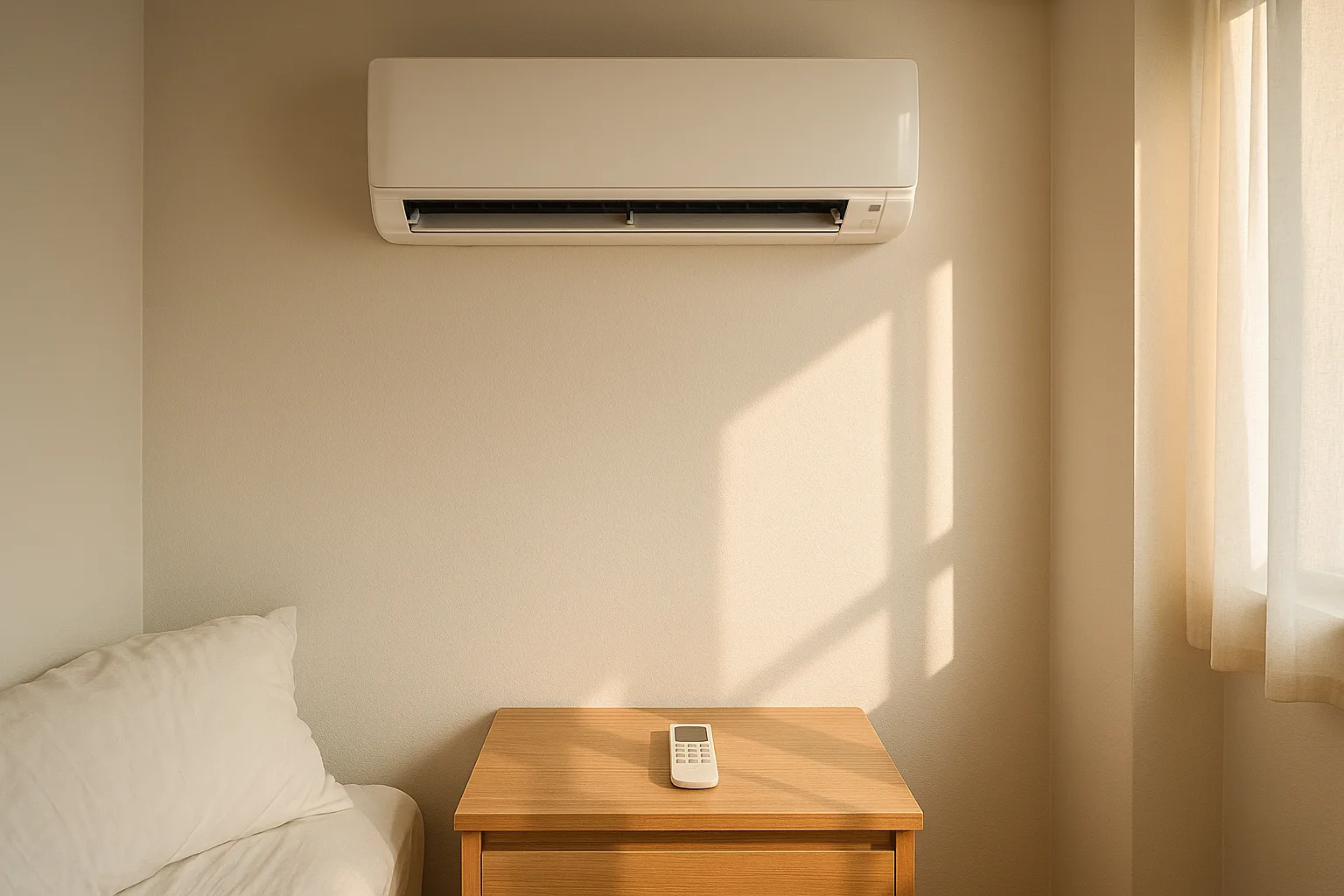
A 2,000-square-foot home in Ohio just received two competing bids for air conditioning replacement. Central system: $11,400. Four-zone mini-split setup: $8,200. The homeowner picked the central system because it "felt more substantial." She'll spend $18,000 more over the next 15 years on that decision. That's not projection — that's math from Price-Quotes Research Lab analysis of real utility data and equipment lifespans.
Most HVAC comparisons are written by contractors selling one system or the other. This one isn't. Here's what actually separates these technologies when you strip out the marketing.
The Upfront Math Nobody Shows You
Central air conditioning costs $7,000 to $15,000 to install in a typical American home. That range isn't confusion — it's variance in house size, ductwork condition, and contractor markup. Here's the breakdown that matters: equipment accounts for roughly 35% of that number. Ductwork installation or replacement adds another 25–30%. Labor runs 20–25%. The remaining 15–20% is permits, accessories, and the markup your contractor tacks on because he can.
Ductless mini-splits? A four-zone system covering the same 2,000 square feet runs $6,000 to $9,500 installed. The equipment costs more per BTU than central systems, but you eliminate the ductwork entirely. That single line item — no metal ducts running through your attic or crawlspace — removes $2,000 to $5,000 from the job before a single copper line gets threaded through your walls.
The average central HVAC installation includes $2,800 in ductwork costs most homeowners never see itemized. That's pure overhead your contractor is hiding in the "total package price."
Contractors push central systems harder because margins are fatter. A typical central installation nets 35–45% gross profit. Mini-split jobs hover around 25–30% because the equipment is commodity-priced and installation is more straightforward. Your central AC salesman isn't recommending the "better" system — he's recommending the one that pays his rent.
Operating Efficiency: The Gap Is Wider Than You Think
Modern central systems hit SEER ratings of 15–22. Mini-splits routinely achieve 25–30 SEER2. On paper, that's 20–30% more efficient. In practice, the gap is wider because of how these systems actually operate in homes.
Central AC cools the entire house whether you need it or not. Bedrooms at 68°F while you're watching TV in a 76°F living room? Central systems can't solve that problem without wasting energy on unoccupied spaces. Mini-splits operate as true zone systems — each unit runs only when its space needs conditioning. According to Department of Energy research, zone-controlled systems cut energy consumption 30–50% compared to single-point central cooling in typical homes.
The technology difference is inverter-driven compressors versus traditional single-stage units. Central systems still sold in 2026 frequently use single-stage or two-stage compressors that cycle on at full power, then off completely. Mini-splits modulate continuously, maintaining temperature with precision. That variable-speed operation means no temperature swings, no compressor wear from hard starts, and 40% less energy drawn from your utility.
Maintenance: The Hidden 15-Year Cost
Central HVAC requires annual maintenance that mini-splits simply don't need at the same scale. Ductwork cleaning runs $300–$500 per session. Refrigerant recharging due to slow leaks in aging duct joints adds $150–$400 every three to five years. Filter changes multiply across multiple returns. A central system owner spends $150–$300 annually on maintenance that a mini-split owner avoids.
Mini-split maintenance is straightforward: clean or replace filters monthly, rinse the outdoor coils annually, and call a technician every three to five years for a professional check. Total annual cost: $75–$150 if you're doing the basics yourself. The units are designed for homeowner-accessible maintenance because they have to be — the market demanded it.
But here's what contractors won't volunteer: central AC failures often trace back to ductwork problems, not equipment failure. Leaky ducts in attics lose 20–30% of conditioned air to heat gain and waste. That inefficiency compounds every year you're running the system. A $500 duct repair suddenly becomes urgent when your ten-year-old central unit is working twice as hard as it should.
Longevity: What Actually Fails and When
Central air conditioning equipment lasts 12–18 years with proper maintenance. Mini-split compressors regularly hit 20–25 years. The difference isn't build quality — it's operational stress. Single-stage compressors cycling on and off experience more mechanical wear than inverter-driven units that ramp up and down smoothly.
The weak link in mini-splits isn't the compressor — it's the electronics. Control boards and sensors in mini-splits can fail earlier than mechanical components, and replacement parts cost more than equivalent central system repairs. Budget $300–$600 for electronics repairs in years 12–18 of a mini-split's life.
The Retrofit Problem Nobody Talks About
New construction doesn't reveal the real advantage. Retrofit situations do. Adding central AC to a 1950s ranch without existing ductwork requires either tearing open ceilings and walls or accepting an ugly attic-mounted system with major efficiency losses from long duct runs.
Mini-split installation requires three-inch holes through exterior walls. That's it. A skilled installer completes a multi-zone retrofit in two days with no drywall damage, no ductwork scaffolding, and no week-long disruption to your household.
For additions, converted garages, basement apartments, and older homes without existing duct infrastructure, the cost comparison isn't even close. Central systems in these scenarios routinely hit $15,000–$20,000 when you factor in new ductwork routing. Mini-splits handle the same spaces for $4,000–$8,000.
When Central Actually Makes Sense
Full disclosure: there are legitimate reasons to choose central HVAC. Large open-plan homes over 3,500 square feet often benefit from central systems simply because mini-split zoning gets complicated at that scale. Humid climates with specific dehumidification requirements might need central's larger air-handling capacity. And if you're replacing an existing central system, the infrastructure already exists — sometimes you just swap equipment rather than fundamentally re-engineer the home.
But for most American homes under 3,000 square feet — especially those built before 1980 without existing ductwork — the numbers favor mini-splits decisively. Lower upfront cost, significantly better operating efficiency, simpler maintenance, and longer equipment life add up to $12,000–$25,000 in savings over a 15-year horizon according to Price-Quotes Research Lab analysis of real installation and utility data.
The One Thing You Should Do Before Signing Anything
Get a Manual J load calculation. Every home has specific heating and cooling requirements based on square footage, insulation, window quality, and climate. Any contractor who gives you a price without running this calculation is guessing. A proper load calculation takes 30 minutes and tells you exactly how many BTUs you need — no more, no less. That number determines whether you're buying the right system or paying for capacity you'll never use.
Run the calculation yourself using the Department of Energy's free online tools, then compare the result against whatever contractors propose. If they're recommending 30% more capacity than your load calculation shows, they're padding the job for margin. That oversized system will cost more to install, operate less efficiently, and wear out faster than a properly sized unit.
The choice between mini-split and central isn't ideological — it's mathematical. Do the math before you sign the check.