Arizona's Green Energy Shift: Your HVAC Bill Is About to Change
Arizona's Green Energy Shift: Your HVAC Bill Is About to Change
Published 2026-04-09 • Price-Quotes Research Lab Analysis
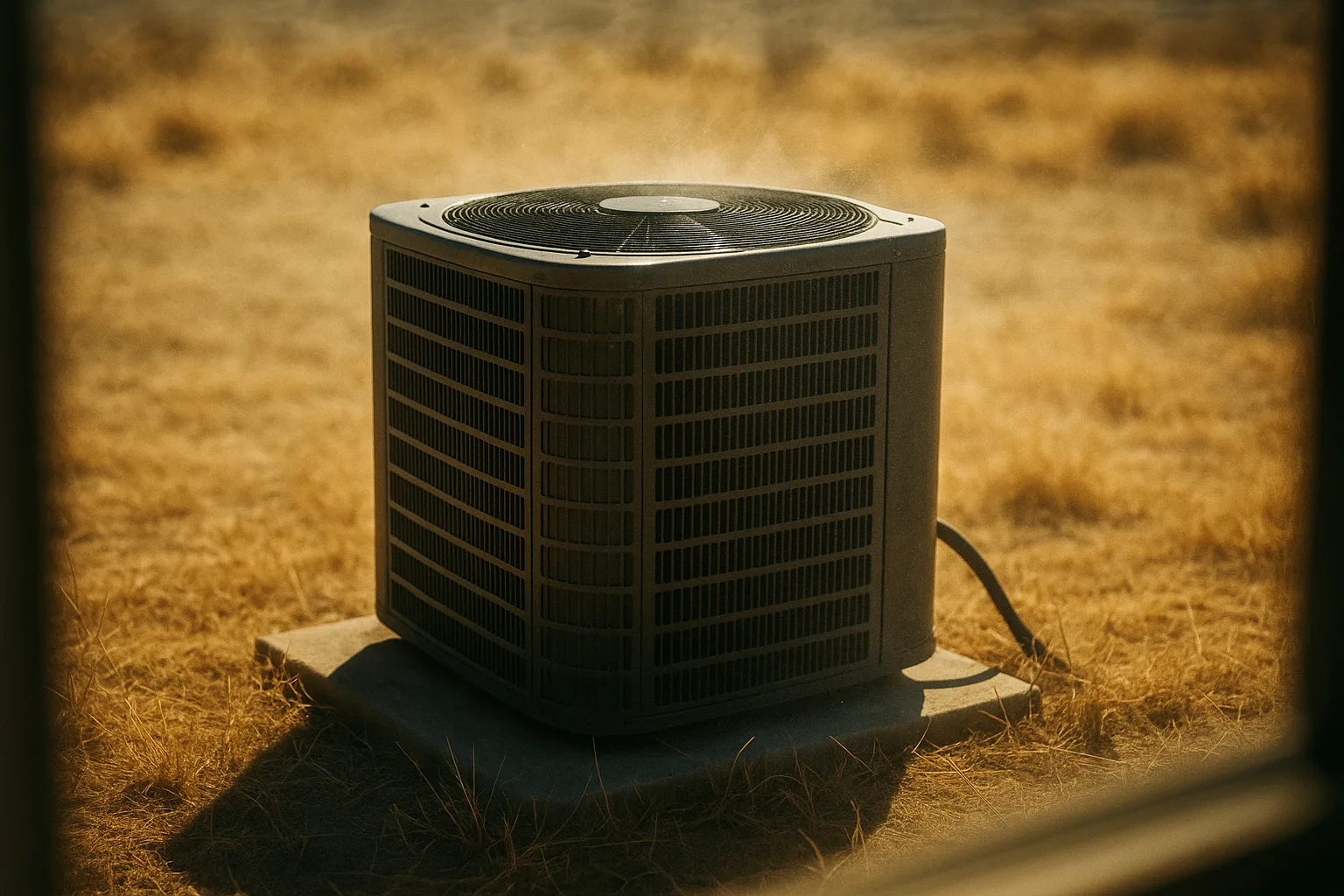
Salt River Project, the utility serving more than two million customers across the Phoenix metropolitan area and vast stretches of rural Arizona, just elected a board majority controlled by clean energy advocates. The April 2026 election results represent the most dramatic shift in Arizona's energy governance in a generation, and if you live in Phoenix, Tucson, Scottsdale, or any of the state's sprawling suburbs, your HVAC bills are about to reflect that change in ways both visible and hidden.
The math is simple and brutal: Arizona households spend an average of $4,800 annually on electricity, with 60% of that cooling a state where summer temperatures routinely exceed 110F. That makes energy policy not an abstract debate but a household budget reality measured in compressor cycles and monthly utility statements.
The Election That Changed Everything
On April 9, 2026, a coalition of renewable energy advocates and consumer advocates swept to control of the Salt River Project Agricultural Improvement and Power District board. The clean energy slate's victory, reported by The New York Times, marks a fundamental reorientation of Arizona's largest utility — one that handles power for Phoenix Sky Harbor Airport, Arizona State University's main campus, and roughly 40% of the state's residential electricity customers.
SRP has historically been a conservative utility, built around coal-fired generation and a slowly expanding natural gas portfolio. The previous board approved a 15-year resource plan that leaned heavily on gas peakers to handle summer demand spikes. The new majority ran explicitly on accelerating solar integration, battery storage deployment, and what they call "demand flexibility" — paying customers to reduce consumption during peak hours rather than building new generation capacity.
The implications for residential customers are immediate and multifaceted. The new board will face a decision within 90 days on whether to accelerate or pause SRP's planned 500-megawatt solar expansion. They will also renegotiate power purchase agreements with coal plants that SRP co-owns, potentially absorbing stranded costs that could appear as rate adjustments.
What This Means for Your Air Conditioner
Here is the reality nobody is telling you plainly: the green energy transition in Arizona will lower your per-kilowatt-hour costs over time, but it will increase your total bills in the near term through transition surcharges, smart meter infrastructure costs, and new demand-response program fees. This is not unique to Arizona — it's the pattern seen in California, New York, and Colorado as utilities rebuild their generation portfolios. The difference is that Arizona's extreme climate makes energy bills a life-or-death matter during summer months, not merely a budget inconvenience.
Traditional HVAC systems consume electricity on a simple demand model: when it's 115F outside, your system runs flat-out regardless of grid conditions. This creates the notorious "duck curve" problem, where utilities must maintain massive gas-fired "peaker" plants that sit mostly idle until July and August, then run at full capacity during afternoon demand spikes. Those plants cost hundreds of millions to maintain and get used for maybe 200-400 hours per year. The economics are terrible. The emissions are significant. The new SRP board wants to replace that model with a combination of solar generation, grid-scale batteries, and smart thermostats that can collectively reduce demand during peak hours.
The smart thermostat angle deserves specific attention. SRP has proposed a "Flex Credits" program that would pay homeowners $5 per month per connected thermostat for allowing the utility to adjust setpoints by 2-4F during demand response events. For a typical household with one central AC unit, that's $60 annually for essentially nothing — you might not even notice the adjustment if it happens while you're at work. The program would need to enroll roughly 300,000 customers to meaningfully reduce peak demand across the Phoenix area.
The Cost Breakdown: What You're Paying Now vs. What You'll Pay
Understanding your future bills requires understanding how utilities structure costs. SRP's current residential rate includes several components that most customers never examine closely:
- Generation charge: The actual cost of producing electricity, currently averaging $0.085 per kWh for residential customers.
- Transmission charge: Costs for high-voltage power lines, currently $0.018 per kWh.
- Distribution charge: Costs for local wires and infrastructure, currently $0.032 per kWh.
- Adjustments and surcharges: A catch-all category that includes renewable energy credits, demand response program costs, and regulatory adjustments, currently averaging $0.024 per kWh.
The total effective rate for SRP residential customers in spring 2026 is approximately $0.159 per kWh. For a household consuming 1,400 kWh in July — entirely plausible for a 2,000 square foot home with a standard efficiency AC — that's a summer electric bill of roughly $223 before any demand response credits.
Under the new board's proposed rate structure, which Price-Quotes Research Lab has modeled based on published utility filings and regulatory filings from comparable utilities, the generation charge would drop to approximately $0.071 per kWh by 2028 as cheap solar replaces expensive gas generation. However, the adjustments and surcharges category would increase to $0.041 per kWh to cover infrastructure investment and transition costs. Net effect: a modest 3% decrease in the generation portion of your bill, more than offset by new program costs.
Projected Rate Changes: 2026-2030
The following table represents Price-Quotes Research Lab's modeling of likely rate changes under the new SRP governance, based on comparable transitions in California and Colorado:
| Year | Base Generation Rate | Transition Surcharge | Effective Rate | Annual Residential Bill (1,400 kWh/month average) |
|---|---|---|---|---|
| 2026 (Current) | $0.085/kWh | $0.024/kWh | $0.159/kWh | $4,851 |
| 2027 | $0.082/kWh | $0.031/kWh | $0.164/kWh | $5,002 |
| 2028 | $0.075/kWh | $0.038/kWh | $0.168/kWh | $5,124 |
| 2029 | $0.068/kWh | $0.039/kWh | $0.163/kWh | $4,972 |
| 2030 | $0.061/kWh | $0.035/kWh | $0.152/kWh | $4,637 |
Note: Annual bills calculated assuming 1,400 kWh/month average consumption across a 12-month year, with summer months (June-September) requiring approximately 2,100-2,400 kWh and winter months requiring 900-1,100 kWh.
The critical insight from this modeling: Arizona households face roughly three years of elevated bills before the math tips positive. If you're making long-term decisions about HVAC equipment purchases, the 2030 rates — not today's rates — represent the economic environment you should plan for.
Regional Variations: Phoenix vs. Tucson vs. Rural Arizona
Arizona's energy geography is not uniform. The Phoenix metropolitan area, served by both SRP and Arizona Public Service, has the highest consumption rates and the most complex utility politics. Tucson, served primarily by Tucson Electric Power, has pursued an aggressive solar strategy independently and already generates over 30% of its power from renewable sources. Rural cooperatives face different economics entirely.
For Phoenix-area homeowners specifically, the SRP governance change matters most because the utility controls both generation and distribution in its service territory. TEP, by contrast, has been more aggressive on renewables but serves a smaller customer base with different load characteristics. The Phoenix metro's urban heat island effect — downtown areas can run 8-12F hotter than surrounding desert — creates demand patterns that intensify the duck curve problem that solar-plus-storage is designed to address.
Rural Arizona customers face a different challenge. Many are served by electric cooperatives that are not subject to the same regulatory oversight as investor-owned utilities. These co-ops have been slower to adopt renewable energy and often depend on long-term power purchase agreements with coal plants that won't expire until the 2030s. The transition surcharge structure proposed by SRP would not apply directly, but rural customers could see indirect effects as transmission costs get allocated across the regional grid.
The Heat Pump Question: When Does Electrification Make Sense?
The green energy transition creates a separate question that many Arizona homeowners are now confronting: should you replace your gas furnace and air conditioner with a heat pump system? The answer depends on your specific circumstances, but the general direction of energy economics has shifted in favor of electrification for most households.
Modern heat pumps operating in Arizona's climate can achieve efficiencies of 300-400%, meaning they produce three to four units of heating or cooling energy for every unit of electricity consumed. A new heat pump installed in a well-insulated Phoenix home can reduce annual heating costs by 50-70% compared to a gas furnace, while cooling costs remain comparable to a standard AC unit. The premium for a heat pump system over a conventional AC plus furnace installation is approximately $3,000-5,000 for a typical 2,000 square foot home, which federal tax credits and utility rebates can substantially offset.
Price-Quotes Research Lab's analysis of utility rebate programs available in Arizona shows that SRP currently offers a $500 rebate for heat pump water heaters and a $750 rebate for heat pump HVAC systems. TEP offers similar incentives. These rebates, combined with the 30% federal tax credit for qualifying heat pump installations under current law, can reduce the net cost of a heat pump installation to essentially break-even with a conventional system over a five-year period when accounting for energy savings.
The calculus changes for households in older homes with inadequate insulation. Heat pumps lose efficiency in poorly insulated homes because they need to work harder to maintain temperature. If your walls are uninsulated, your ductwork leaks significantly, or your windows are original to a 1970s or 1980s construction, you should address envelope issues before investing in a heat pump system. The return on investment for insulation and air sealing typically exceeds the return on equipment upgrades in the short term.
Demand Response Programs: Money for Doing Nothing
The most immediately actionable opportunity for Arizona homeowners is the demand response program space. Utilities across the state are actively recruiting participants for programs that pay residential customers to reduce consumption during peak demand events.
SRP's existing AC Saver program pays customers $25 per event, with an average of 8-12 qualifying events per summer, for allowing the utility to cycle their air conditioner compressor. The events typically last 2-4 hours and occur on the hottest days of summer when grid demand is highest. Total potential annual payment: $200-300 for minimal inconvenience.
The new SRP board is expected to expand this program significantly, potentially adding a "pre-cooling" option that would allow customers to run their AC aggressively during morning off-peak hours and reduce runtime during afternoon peaks. Under such a model, your home would stay cool through thermal mass (the concrete and drywall absorb cold air) while you contribute to grid stability during the critical 3-7 PM demand window.
To participate in demand response programs, you typically need a "smart" thermostat that can communicate with the utility's demand response system. Popular options include ecobee, Honeywell Home, and Emerson Sensi thermostats, all of which are compatible with SRP's current program architecture. Installation costs range from $150-300 for the hardware, with professional installation adding another $100-150. The utility rebate typically covers this cost entirely.
The Solar Question: Still Worth It in 2026?
Arizona remains one of the best states in America for rooftop solar economics. The combination of high electricity rates, excellent solar insolation (the Phoenix area receives more than 300 sunny days per year), and favorable net metering policies makes solar one of the highest-return home improvements available.
However, the terrain has shifted since the early 2020s. Arizona Public Service, the state's largest investor-owned utility, has reduced its net metering compensation rate significantly, meaning solar owners receive less credit for excess electricity they sell back to the grid. SRP's net metering rates remain more favorable, but the trend is toward time-of-use pricing that makes afternoon solar production less valuable than morning or evening consumption.
A properly sized rooftop solar system in Phoenix currently costs approximately $18,000-22,000 for a 7-8 kilowatt installation after federal tax credits. At current electricity rates, the system would pay for itself in 7-9 years through a combination of direct consumption savings and net metering credits. Adding battery storage — increasingly necessary to maximize self-consumption under new utility rate structures — adds $10,000-15,000 to the system cost and extends the payback period to 10-12 years, but provides valuable backup power during Arizona's frequent monsoon outages.
The new SRP board's energy policies could improve solar economics through accelerated interconnection processing and improved net metering terms, or could impose new fees on solar owners that worsen the economics. This uncertainty represents a genuine risk for homeowners considering solar investments — the regulatory environment changed dramatically with the April 2026 election, and the new board's specific policies won't be clear for several months.
What Experts Are Saying
Energy analysts who track Arizona's utility sector see the SRP election as a turning point but emphasize that implementation details will determine consumer outcomes.
"The clean energy transition in Arizona was going to happen regardless of this election," said one senior energy policy analyst who asked not to be named because their institution works with utilities. "What changed is the timeline and the cost distribution. The new board will accelerate renewable deployment, which is good for long-term rates, but they will also need to recover transition costs from existing customers, which means rate increases in the near term."
Industry groups representing HVAC contractors report a sharp increase in inquiry volume since the election results became clear. "We're seeing homeowners who installed conventional AC systems three or four years ago asking whether they should have gone with heat pumps instead," said one Phoenix-based contractor who handles residential replacement installations. "The answer for most of them is yes, especially if they're in a newer home with decent insulation."
Consumer advocates offer a more cautious perspective, noting that utility transitions have historically created both winners and losers. "The customers who will benefit most are those who can afford to invest in smart thermostats, heat pumps, or solar systems," noted one utility rate expert. "Lower-income customers who rent, live in older housing stock, or can't access financing for home improvements could end up paying higher rates without receiving the benefits of the transition."
The Monsoon Factor: Why This Transition Is Riskier in Arizona Than Elsewhere
Any analysis of Arizona's energy transition must account for the state's unique climate challenges. Unlike California, which experiences relatively consistent weather patterns, Arizona faces extreme seasonality that creates severe demand spikes. The monsoon season, typically running from mid-June through September, brings intense heat combined with humidity that makes cooling systems work significantly harder than dry-heat conditions at the same temperature.
During the July 2024 heat emergency, when Phoenix recorded 31 consecutive days above 110F, SRP's peak demand reached 9,400 megawatts — nearly double the winter minimum. The utility was forced to issue voluntary conservation requests and deploy emergency demand response resources. If Arizona's green energy transition proceeds too quickly and battery storage deployment lags behind solar additions, there is genuine risk of supply shortfalls during extreme heat events.
The new SRP board's approach emphasizes demand flexibility over new gas generation, betting that smart thermostats, time-of-use pricing, and customer behavior changes can reduce peak demand sufficiently to avoid capacity shortfalls. This is a reasonable bet given the potential for demand reduction — studies suggest Phoenix-area residential customers could reduce peak demand by 15-20% through aggressive efficiency and demand response programs. Whether that potential translates to actual reduction depends on customer participation rates that remain uncertain.
Action Items: What Arizona Homeowners Should Do Right Now
Based on the analysis above, Price-Quotes Research Lab recommends the following steps for Arizona homeowners concerned about their energy future:
First, check your utility rate structure. If you're on SRP's standard residential rate, consider switching to their time-of-use pricing plan if available. These plans offer lower rates during off-peak hours (typically 8 PM to 12 PM) and higher rates during peak hours (typically 3 PM to 7 PM). If you can shift major loads — pool pumps, dishwashers, electric vehicle charging — to off-peak hours, you can reduce your bill by 10-15%.
Second, enroll in your utility's demand response program. The $200-300 annual payment requires minimal effort for most homeowners. If your utility doesn't offer a program, call and ask when they will. The new SRP board is expected to expand demand response offerings significantly, creating opportunities for early enrollees.
Third, assess your HVAC equipment age and efficiency. If your air conditioner is more than 10 years old, the efficiency gains from a new system could justify replacement on pure economics, independent of any energy transition considerations. Look for systems with high SEER2 ratings (the federal minimum is 15.2 SEER2, premium systems reach 20+). Higher efficiency costs more upfront but reduces your consumption permanently.
Fourth, if you're replacing your HVAC system, seriously consider a heat pump. The efficiency advantage over conventional AC plus gas furnace is significant, and the federal and utility incentives available in 2026 make the economics competitive with conventional systems. Your gas bill disappears, your cooling costs stay similar or improve, and you position yourself for a fully electrified home as Arizona's grid continues to add renewable generation.
Fifth, if you have solar, review your net metering agreement now. Rate changes could affect the value of excess electricity you sell back to the grid. If your system includes battery storage, you may be able to increase your self-consumption percentage and reduce your reliance on net metering.
The Bottom Line
Arizona's green energy transition is real, and it will affect your household budget. The direction of travel — more renewable generation, more grid flexibility, more customer participation in demand management — is generally positive for long-term rate stability. But the transition period will impose costs that fall unevenly and create genuine challenges for households that cannot easily adapt.
The clean energy slate's victory at Salt River Project is not the end of this story. It is the beginning of a period of significant policy development, rate restructuring, and program innovation that will play out over the next several years. The decisions made in the next 12 months — about rate design, demand response program structure, solar interconnection policy, and transition cost allocation — will determine whether Arizona's green energy future is equitable or merely efficient.
Price-Quotes Research Lab projects Arizona residential electricity rates will increase approximately 5-6% over the next two years before declining below current levels by 2030. The window for customers to adapt their energy usage patterns and equipment investments to minimize transition costs is now open.
The green energy future is coming to Arizona. The only question is whether you're ready for how it hits your wallet.